

We are pleased to announce the Healthy Futures South Africa (HFSA) PhD Fellowship Programme, offered by the University of Cape Town (UCT), under the Africa Health Collaborative, in partnership with the Mastercard Foundation.
This four-year doctoral fellowship is designed to build Africa’s next generation of health researchers and leaders, supporting talented doctoral candidates whose work is grounded in community needs and responsive to the realities of health systems in low-resource and underserved settings.
Fellowship Strategic Priority Themes
The Fellowship supports doctoral research aligned with HFSA’s strategic priority themes, including:
- Community-Oriented Primary Care (COPC)
- Health Systems Strengthening
- Youth Empowerment in Health
- Public Health & Health Policy
- Health Innovation & Entrepreneurship
- Health Economics
- Mental Health & Addiction Care
- Emergency & Family Medicine
- Health and Rehabilitation Sciences
- Community Engagement & Health Promotion
Fellows propose original research in one or more of these areas.
Leadership and knowledge translation: Beyond the doctoral research itself, Fellows are expected to translate their findings into policy-relevant outputs, including a final policy brief, and to contribute to sustainable health system transformation across Africa.
Benefits
This is a fully funded, four-year doctoral fellowship. Subject to approved budgets, selected Fellows will receive:
- Tuition support: Tuition and international student fees covered for the duration of the Fellowship.
- Living and accommodation support: Accommodation support and a living allowance.
- Health and wellbeing coverage: Student medical cover and immigration/visa-related cost support.
- Research resources: Once-off laptop and equipment support, plus funding for research costs including fieldwork and dissemination.
- Professional development: short courses, research methodology training, and leadership development training.
- Travel support: Conference and research travel support, plus economy-class travel for eligible Fellows residing outside Cape Town.
- Mentorship and network: Formal mentorship beyond the academic supervisor, and membership in the HFSA Fellows Network.
Eligibility Requirements
Applicants must meet the following minimum criteria to be considered for the HFSA PhD Fellowship:
- Be a South African citizen, or an alumnus/alumna of an Africa Health Collaborative partner institution
- Be registered, or eligible for registration, for a PhD programme at the University of Cape Town
- Commit to full-time or structured part-time doctoral study for the duration of the four-year Fellowship (part-time work not exceeding 20 hours/week is permitted alongside the Fellowship)
- Demonstrate strong academic performance and research potential, including prior academic achievement
- Propose a research topic aligned with one or more of HFSA’s strategic priority themes
- Provide academic references and evidence of supervisor support as part of the assessment process
Preference will be given to:
Women, youth (under age 35), persons living with disabilities, candidates from historically disadvantaged or underrepresented backgrounds, and applicants who demonstrate financial need, leadership potential, and a commitment to implementation-focused or community-engaged research.
Why Study with HFSA at the University of Cape Town
- Strategic institutional partnership: HFSA is implemented through UCT’s Department of Family, Community and Emergency Care, as part of a broader partnership between UCT and the Mastercard Foundation through the Africa Health Collaborative.
- Community-grounded research focus: Every Fellowship is grounded in the realities of low-resource and underserved health systems, rather than abstract or purely academic inquiry.
- Beyond the dissertation: Fellows gain access to formal mentorship beyond their academic supervisor, leadership development opportunities, and a peer network through the HFSA Fellows Network.
- Policy impact: The programme prioritizes research capable of generating practical solutions and influencing policy and practice, not just academic output.
How to Apply
Applying for the HFSA PhD Fellowship is a two-part process:
Part One: University Academic Application
Apply directly to UCT for doctoral study and placement before submitting an HFSA Fellowship application, as HFSA does not manage or process academic applications. Applications are submitted and tracked via the official UCT postgraduate online application system. Applicants requiring accommodation should also follow UCT Student Housing procedures, and international applicants can seek support from UCT’s International Academic Programmes Office (IAPO).
Part Two: HFSA Fellowship Application
Once your UCT application has been submitted:
- Complete the official HFSA PhD Fellowship Application Form, ensuring the research proposal aligns with HFSA’s priority themes and proof of UCT application is attached.
- Prepare supporting documents as a single PDF, including:
- Certified copy of ID or passport
- Academic transcripts and qualifications
- Curriculum Vitae (maximum 3 pages)
- Research proposal (maximum 5 pages)
- Proof of UCT application or registration
- Supervisor confirmation or support letter (if available)
- Two academic referee reports (submitted directly by referees)
- Proof of funding (if applicable)
- Proof of address (not older than 3 months)
- Submit your completed application electronically to FACE.Research@uct.ac.za with the subject line “HFSA PhD Application.”
Program Dates
Fellowship duration: up to four years, subject to satisfactory academic progress, continued UCT registration, and availability of funds. Continuation of funding is reviewed annually and is not automatic.
Application Deadline: Saturday, 31 October 2026 at 23:59 SAST
Interviews (if shortlisted): November 2026
Queries
Email: FACE.Research@uct.ac.za
Download the Fellowship’s Application Guidelines and Terms of Reference
Important note: Applications must include all required supporting documents; late or incomplete applications will not be considered. The University of Cape Town reserves the right to cancel incomplete or late applications, amend the conditions of the Fellowship, or make no awards at all.
This programme is implemented by the University of Cape Town’s Department of Family, Community and Emergency Care under the Africa Health Collaborative, in partnership with the Mastercard Foundation.
More News & Events
Skip scroller content
Connecting Generations, Research, and Leaders for Africa’s Health Systems at Emerging Leaders Day 2026
Emerging Leaders’ Day 2026 brought together students, researchers, and decision-makers from across Africa to explore leadership, evidence-informed action, and intergenerational collaboration in strengthening the continent’s health systems.

Beyond Stay or Go: Rethinking Africa’s Health Workforce Mobility
As Africa expands its health workforce, the challenge is no longer simply training more professionals. The real question is how to balance workforce retention, employment opportunities, ethical recruitment and professional mobility in ways that strengthen health systems while respecting individual career aspirations.
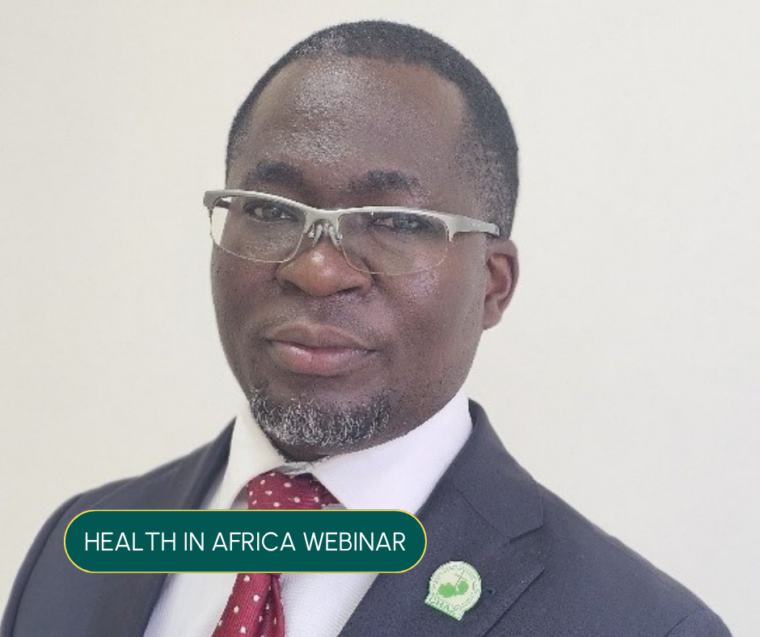
How Africa Can Take Leadership in its Health Outcomes
In our next Health in Africa Webinar Series, we will explore practical ways to optimize existing funding, technology and health workforce capacity, strengthen frontline service delivery, and increase African leadership in health outcomes.

Nine Partner Institutions Endorse Nairobi Accord to Advance Youth Leadership and Evidence-Informed Health Action
The Nairobi Accord positions young people as co-creators of Africa’s health future. Endorsed by nine universities, the agreement advances youth leadership, evidence generation, and collaborative action to strengthen health systems while expanding employment and entrepreneurship opportunities for young Africans.

Prof. Angela Owusu-Ansah’s Call to Uncover Africa’s Health Successes and Contributions
Delivered by Prof. Angela Owusu-Ansah, Provost of Ashesi University, this closing address at the 2026 Africa Health Collaborative Annual Convening outlines her key priorities for 2027 in her new role as Chair of the Executive Steering Committee.

Meet the Speakers Scheduled for the 2026 AHC Annual Convening
Meet the distinguished speakers of the 2026 Africa Health Collaborative Annual Convening as they share insights on health workforce development, leadership, innovation and partnerships shaping the future of health systems across Africa and empowering the next generation of health leaders.

Beyond the Agenda: Bringing Mental Health and Well-being into the 2026 AHC Annual Convening
At the 2026 Africa Health Collaborative Annual Convening, mental health and well-being move beyond discussion into practice. Through quiet spaces, art therapy, movement, and youth-led innovation, AHC is creating a convening experience that supports meaningful participation, connection, leadership, and lasting impact.
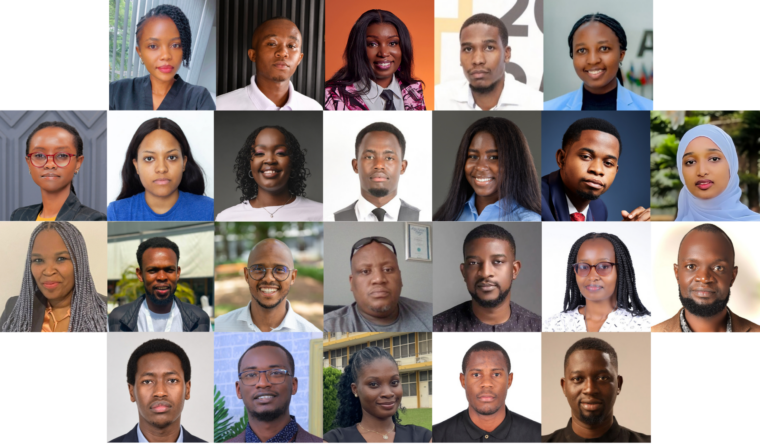
Meet the Ventures Showcasing at the 2026 Africa Health Collaborative Annual Convening
These ventures advancing primary healthcare, entrepreneurship and health systems strengthening across Africa will showcase their innovations at the 2026 Annual AHC Convening.

From Clinic to Country: Building Ethiopia’s First Integrated Model for Older Adult Health
What began with one doctor questioning fragmented care for older adults has grown into a pioneering model for Ethiopia. With leadership skills strengthened through the IMIx Certificate, Dr. Asrat built an integrated clinic now informing the country’s healthy aging efforts.

Ubuntu Rising Centres Youth Leadership, Innovation and Employment in Africa’s Health Future
More than 80 young health professionals, innovators and leaders gathered at Ubuntu Rising to advance youth leadership, innovation and employment. Their nine recommendations will inform the Africa Health Collaborative’s Youth Agenda and strengthen pathways for young people across Africa’s health ecosystem.