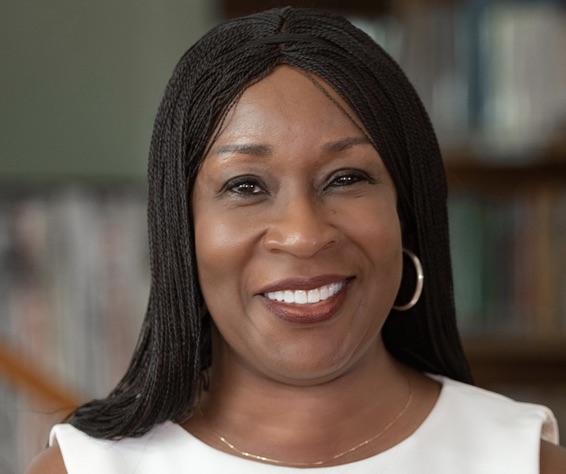
Delivered by Prof. Angela Owusu-Ansah, Provost of Ashesi University, this closing address at the 2026 Africa Health Collaborative Annual Convening outlines her key priorities for 2027 in her new role as Chair of the Executive Steering Committee.
Colleagues, friends, young adults,
Thank you for the honor given me and Ashesi University, where I serve.
Our intent in this year-long role is best explained in three scenarios:
First, a not-so-visible challenge young Africans face;
Second, a neglected hope;
and third, what the youth in the collaborative will do this year to amplify the hope, both as a reality and as an outcome of mitigating the challenge.
Allow me to begin with a young woman none of us has met.
She is in her second year at one of our universities in Kumasi, or Kigali, or Nairobi. And this morning, she read something in the news about health in Africa. What she read almost certainly was about what Africa lacks, including shortages of doctors, the burden of disease, and the gaps, deficits, the needs.
None of it was false. But each one was a partial… a partial truth.
It is this partial narrative that haunts me and cripples our young adults. A young person who hears only the deficit components of her continent’s story learns, quietly, persistently, and permanently, that solutions are elusive or non-existent. And so she learns helplessness and hopelessness. She settles, looking inward with despair or outward for answers.
That young woman is who our 2027 year is for.
This year, I would like our collaborative to ask the young people of our universities to do something we have never asked of them before: to find out what Africa already does well and to publish the evidence as a model and exemplar for others to emulate.
We are calling what they will look for pockets of excellence; places on this continent where something in health has worked, demonstrating our capabilities beyond potential and promise, backed with numbers and a reason why it worked that can be explained and copied.
And I want to say simply: these places exist.
I know they exist because my team and I have begun looking, and we stopped counting at 67.
In Rwanda, in 2011, 93,888 girls received their first HPV vaccination in just two days…two days! Not because the health system was large, but because somebody noticed that 98 percent of Rwanda’s girls were already sitting in classrooms and built the program around schools instead of clinics.
Another: at Redeemer’s University in the town of Ede in Nigeria. A private university, not a national institute or a famous one, had its laboratory sequence the first SARS-CoV-2 genome on this continent just three days after the sample reached its doors.
One more. One last one.
There is a piece of software that serves as the official health information system of more than 80 governments around the world, carrying the health data of some three billion people. It was first built in 1994 for three health districts in Cape Town. Most of our students have never been told that. I haven’t been told that. And I am sure many people my age also have no idea about these successes. Some of them will use it in their working lives (some of our young people, that is) and never know where it came from.
Now, we could commission this work, but we’re not going to do that.
And the reason matters.
A young person who is handed a finished list is grateful, but it too is partial.
A young person who is handed a starting point and asked to extend it goes and does the work, and the finding becomes hers.
She verified it.
She made the telephone calls.
She beat the path to speak to people.
Nobody can take that from her, and nobody has to persuade her that it is true and that it is complete and not partial.
So the work is theirs.
Our students and our early-career colleagues will build the African Health Capability Atlas: a map not of where Africa’s problems are, but of where Africa’s capabilities are.
They will turn what they find into teaching cases that will sit in classrooms across this collaborative and beyond, year after year, long after the young people who wrote them have graduated.
Sustainability.
They will author the first State of African Health Capability Report, and our selective faculty will walk beside them, mentoring, supervising, and endorsing the work alongside.
I want to be honest about how much of this is unfinished.
Roughly a quarter of what we have found so far is verified in its results, that is, and entirely undocumented in its implementation and mechanism.
We know Niger eliminated river blindness, but nobody has written down how.
Now, this is not a gap in our plan or our preparation of seeking pockets of excellence.
It is the assignment.
And a student who closes one of these gaps will have produced something that does not currently exist anywhere in the world, and she will experience her value and foresee her impact.
Sustainability here again.
One promise to the young people and to each other:
We will not ask them to tell a pretty story.
A collection of unbroken successes is not a counter-narrative.
It is fiction; advertising at best.
And young people see through such narratives.
What makes an account believable is that it carries the failures too and grapples to explain them.
At the end of this year, I want every young person who takes part to hold three things.
One, a documented example of African excellence that she found herself, with her name on it.
Two, the experience of having added something of worth to this continent’s record of itself.
And three, the purpose of the year and the expectation, quiet, settled, unremarkable to her, that she can do this kind of work again and again and again.
For four years, this collaborative has asked good questions.
Is health an economic driver?
Can Africa lead its own research?
Can we mobilise an ecosystem?
Can we prove our impact?
We answered all of them well.
The question for 2027 is about sustainability.
And I think it is the right one to end our first chapter as part of the collaborative.
It asks:
What will remain at our institutions because the Africa Health Collaborative existed?
I have come to believe the necessary answer is a generation of young Africans who have seen with their own eyes and in their own data that this continent already knows how to do difficult things well, and who therefore, because of this, will expect to do difficult things well themselves.
That is what I would like us to leave behind.
Let us complete the partial truths the young lady heard this morning about health in Africa.
Let us go find the other uplifting narratives of excellence, and let us let them lead.
Thank you.
Provost (Chief Academic Officer/Pro Vice Chancellor) at Ashesi University
More News & Events
Skip scroller content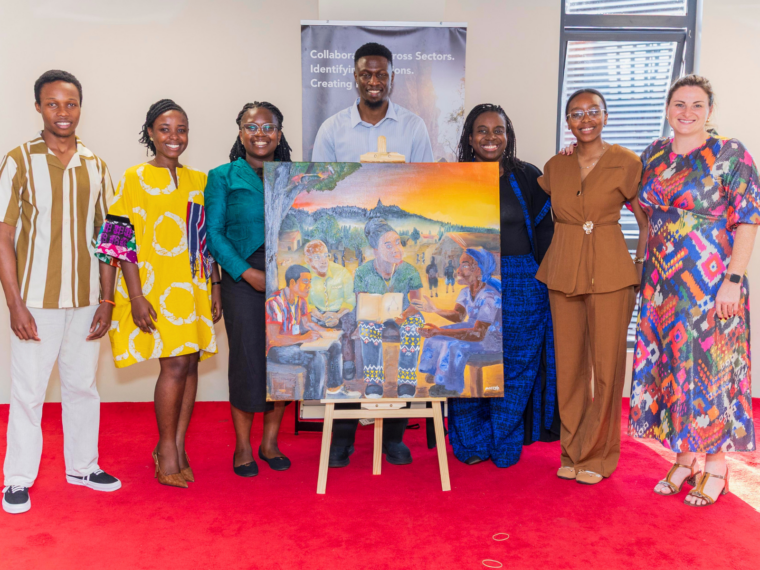
Connecting Generations, Research, and Leaders for Africa’s Health Systems at Emerging Leaders Day 2026
Emerging Leaders’ Day 2026 brought together students, researchers, and decision-makers from across Africa to explore leadership, evidence-informed action, and intergenerational collaboration in strengthening the continent’s health systems.
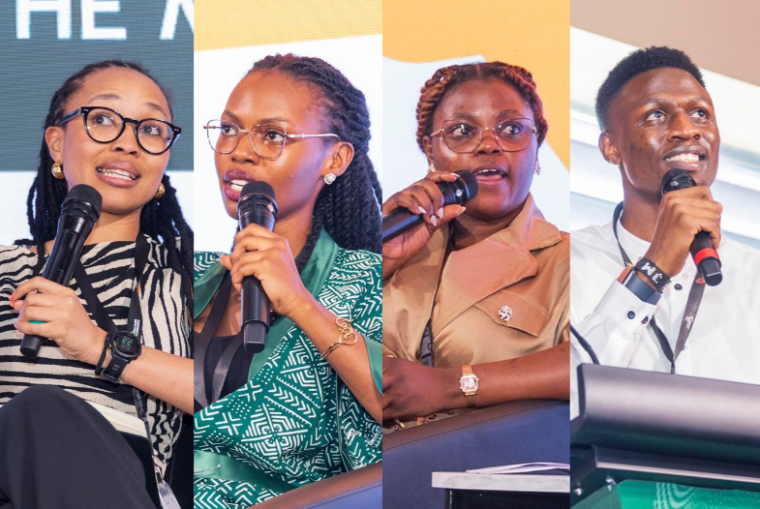
Beyond Stay or Go: Rethinking Africa’s Health Workforce Mobility
As Africa expands its health workforce, the challenge is no longer simply training more professionals. The real question is how to balance workforce retention, employment opportunities, ethical recruitment and professional mobility in ways that strengthen health systems while respecting individual career aspirations.
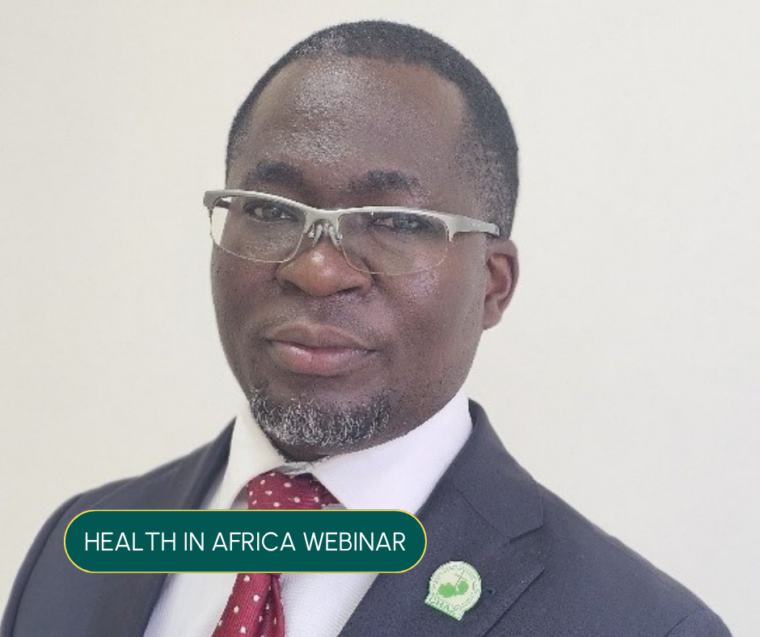
How Africa Can Take Leadership in its Health Outcomes
In our next Health in Africa Webinar Series, we will explore practical ways to optimize existing funding, technology and health workforce capacity, strengthen frontline service delivery, and increase African leadership in health outcomes.
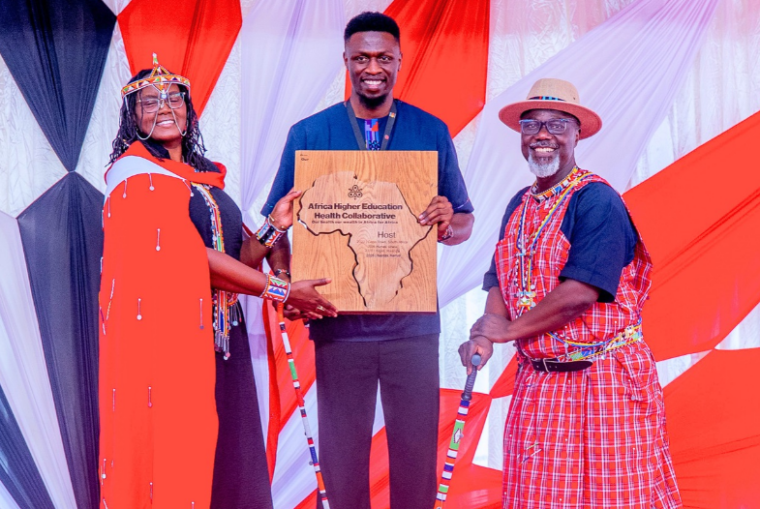
Nine Partner Institutions Endorse Nairobi Accord to Advance Youth Leadership and Evidence-Informed Health Action
The Nairobi Accord positions young people as co-creators of Africa’s health future. Endorsed by nine universities, the agreement advances youth leadership, evidence generation, and collaborative action to strengthen health systems while expanding employment and entrepreneurship opportunities for young Africans.

Meet the Speakers Scheduled for the 2026 AHC Annual Convening
Meet the distinguished speakers of the 2026 Africa Health Collaborative Annual Convening as they share insights on health workforce development, leadership, innovation and partnerships shaping the future of health systems across Africa and empowering the next generation of health leaders.
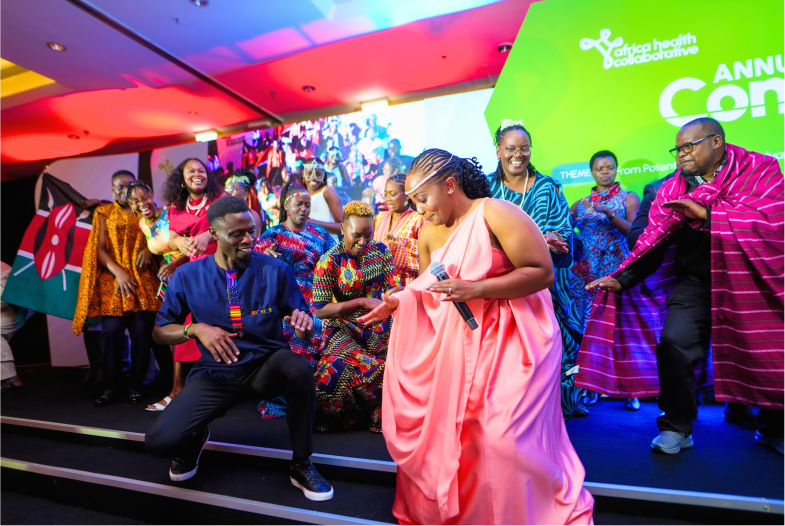
Beyond the Agenda: Bringing Mental Health and Well-being into the 2026 AHC Annual Convening
At the 2026 Africa Health Collaborative Annual Convening, mental health and well-being move beyond discussion into practice. Through quiet spaces, art therapy, movement, and youth-led innovation, AHC is creating a convening experience that supports meaningful participation, connection, leadership, and lasting impact.
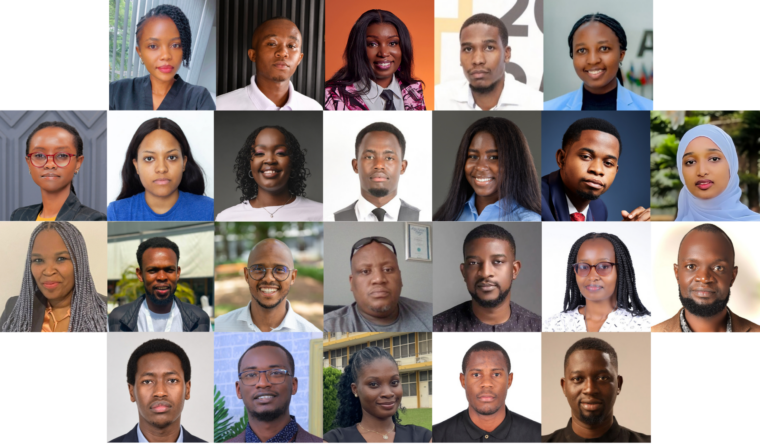
Meet the Ventures Showcasing at the 2026 Africa Health Collaborative Annual Convening
These ventures advancing primary healthcare, entrepreneurship and health systems strengthening across Africa will showcase their innovations at the 2026 Annual AHC Convening.
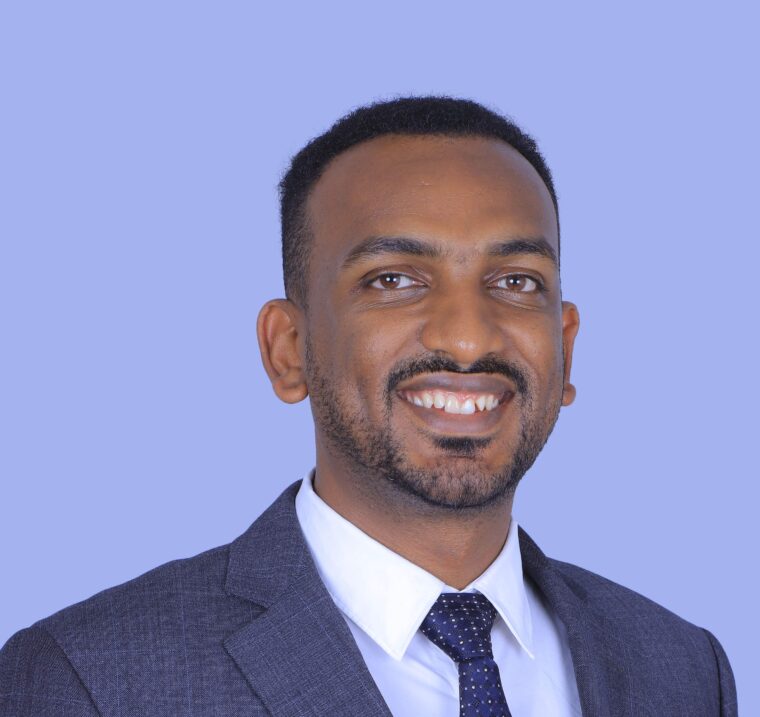
From Clinic to Country: Building Ethiopia’s First Integrated Model for Older Adult Health
What began with one doctor questioning fragmented care for older adults has grown into a pioneering model for Ethiopia. With leadership skills strengthened through the IMIx Certificate, Dr. Asrat built an integrated clinic now informing the country’s healthy aging efforts.
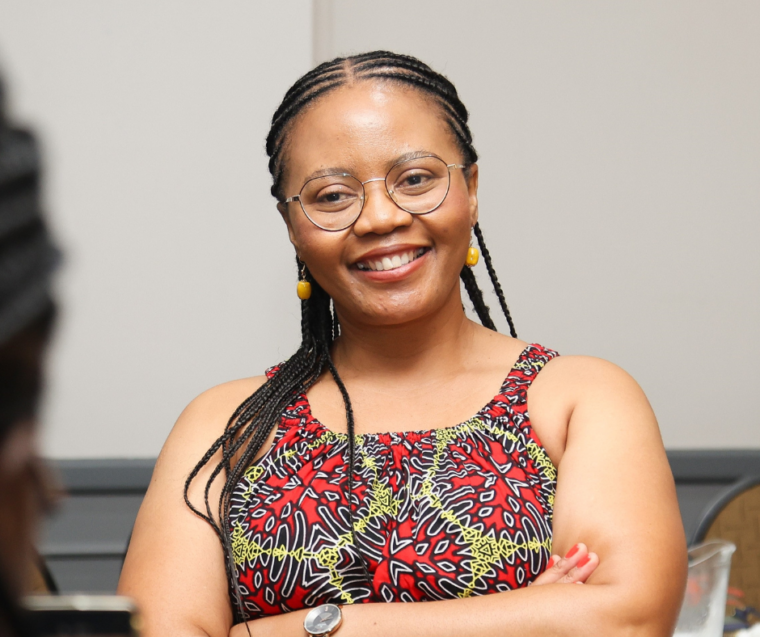
Apply for the Fully-Funded Healthy Futures South Africa (HFSA) PhD Fellowship Programme
This four-year programme supports emerging African health researchers and leaders to conduct community-focused research, strengthen health systems, and translate evidence into meaningful policy impact.
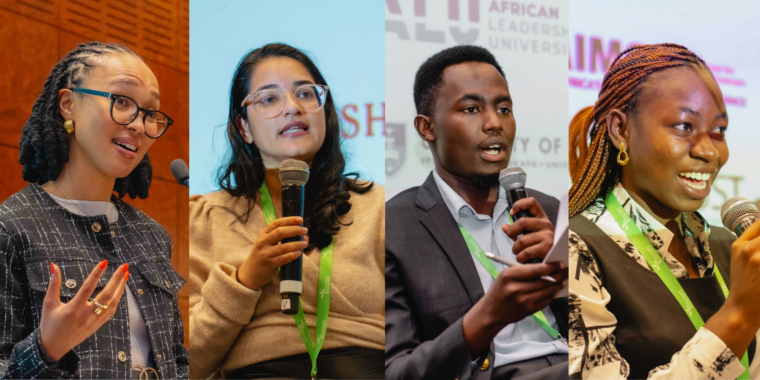
Ubuntu Rising Centres Youth Leadership, Innovation and Employment in Africa’s Health Future
More than 80 young health professionals, innovators and leaders gathered at Ubuntu Rising to advance youth leadership, innovation and employment. Their nine recommendations will inform the Africa Health Collaborative’s Youth Agenda and strengthen pathways for young people across Africa’s health ecosystem.