This is the story of a young person’s journey from Kakuma Refugee Camp to the WHO – showing how lived experience can drive innovation in global health
My name is Kuol Maper Alier. I was born in South Sudan, but my early life was shaped by displacement, resilience, and a relentless pursuit of purpose.
I began my education in Kakuma Refugee Camp in Kenya, where I completed primary school in 2008. Life in Kakuma was not easy, but it instilled in me discipline, determination, and a vision beyond the camp’s boundaries. With support from the Catholic Diocese of Nakuru, I earned a scholarship to pursue secondary school in Naivasha, a town in central Kenya, from 2009 to 2012.
In my final year, I sat for the Kenya Certificate of Secondary Education (KCSE). I missed the cut-off for a World University Service of Canada (WUSC) scholarship by a single point. That moment could have ended my dream of higher education abroad—but instead, it became a turning point. I refused to let one missed opportunity define me. Instead, it fueled my determination to seek another path forward.
Rising Through Crisis
That determination carried me back to South Sudan in 2013, where I began looking for ways to fund my university education. But later that year, the political crisis forced me into the Mingkaman IDP Camp. What felt like another setback quickly became an opening: I secured a position with the International Rescue Committee (IRC), first as a Monitoring and Evaluation Officer and later as Deputy Program Manager in Ajuongthok Refugee Camp, one of the largest camps in the region.
This work gave me more than employment. It offered an education in how fragile health systems operate under immense strain. I saw how data was collected, but rarely used to improve care. Patients slipped through the cracks, not from neglect, but from weak systems. These lessons stayed with me, shaping the vision I carried into the next chapter of my journey.
Building a Foundation in Data and Statistics
Determined to strengthen my skills, I enrolled at Moi University in Kenya in 2016 to pursue a Bachelor of Science in Applied Statistics with Computing. I graduated in 2021 with Second Class Honours (Upper Division).
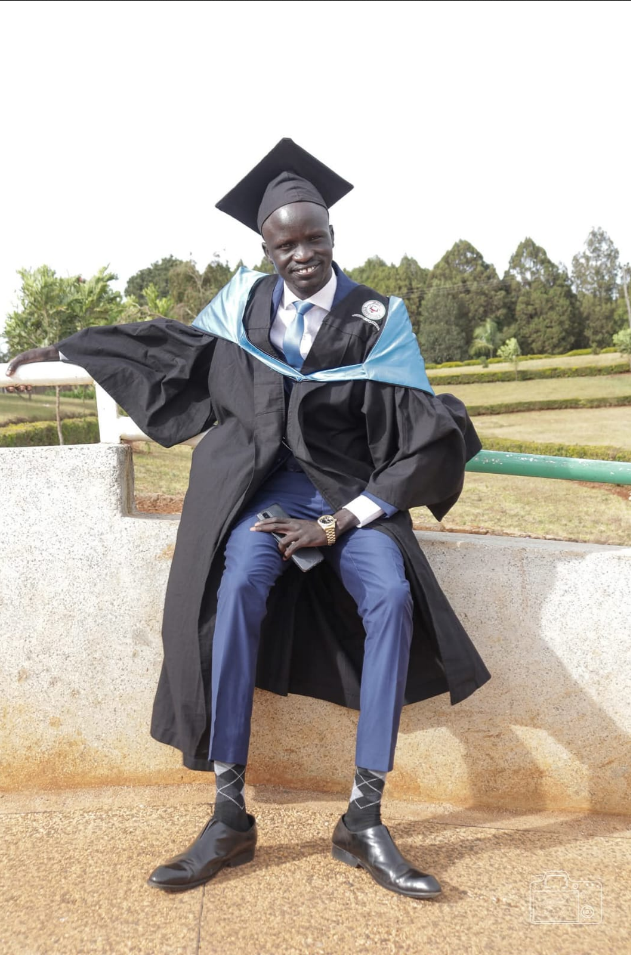
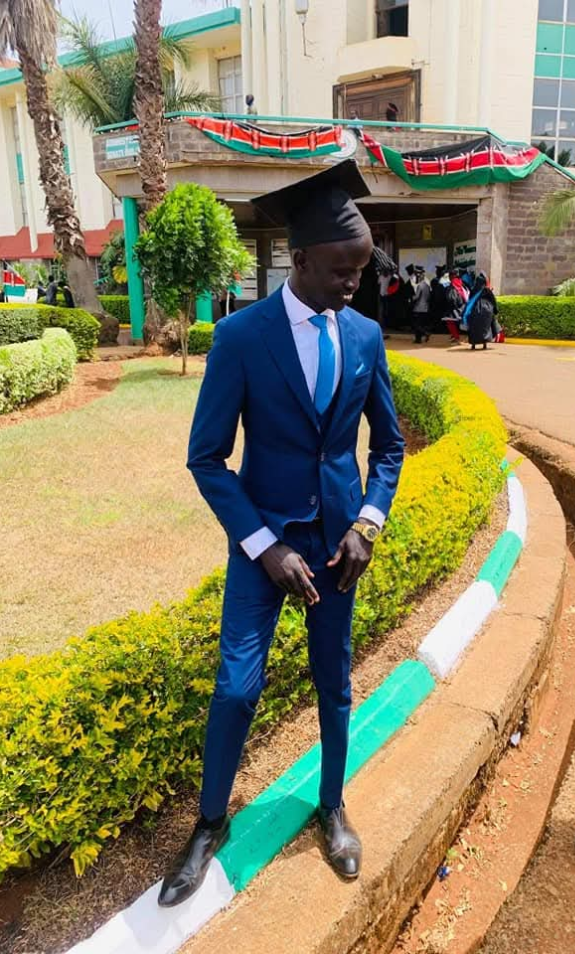
Kuol on his graduation day at Moi University
At Moi, I built a strong technical foundation—but even more importantly, I discovered clarity about my purpose. Numbers alone were not enough. I wanted to apply data to improve health systems and ensure that every statistic translates into real change for real people. That realization set the stage for my transition into public health.
A Personal Loss, A Renewed Mission
As I prepared graduate school applications in 2022, tragedy struck. My sister died from complications of hypertension, just nine months after giving birth. Her death was preventable, and it shattered me. But it also sharpened my mission. Education was no longer only about personal advancement—it became a tool to confront the very challenges that had touched my own family. I knew I wanted to pursue health informatics and create systems that could prevent others from experiencing the same loss. That conviction guided me into the next, life-changing opportunity.
Expanding Horizons: Graduate Studies at the University of Toronto
In 2023, I was selected for the Mastercard Foundation Scholars Program at the University of Toronto, under the Africa Health Collaborative, to pursue a master’s degree in Health Informatics. This was more than financial support—it was a community of visionaries from across Africa who challenged and inspired me.
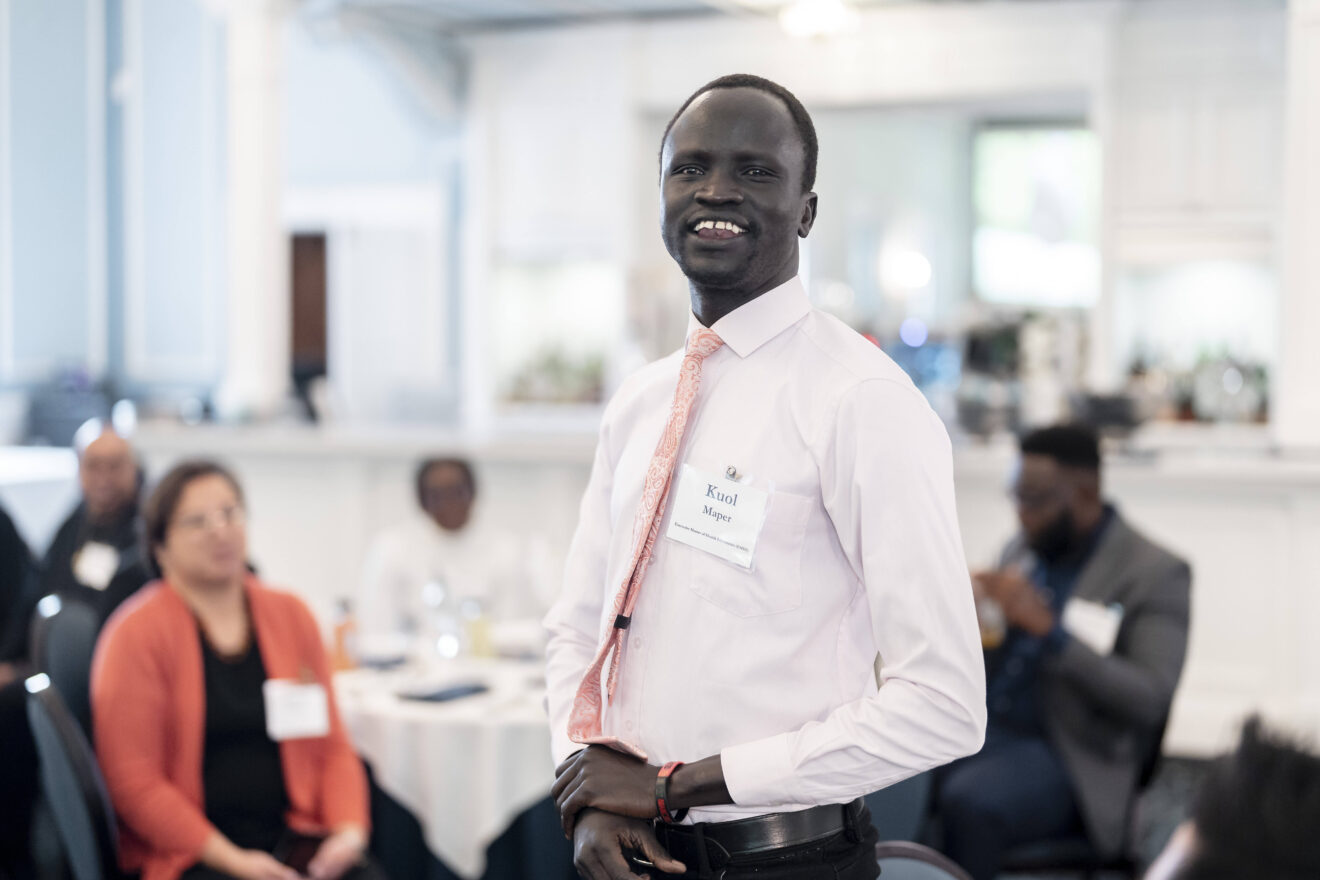
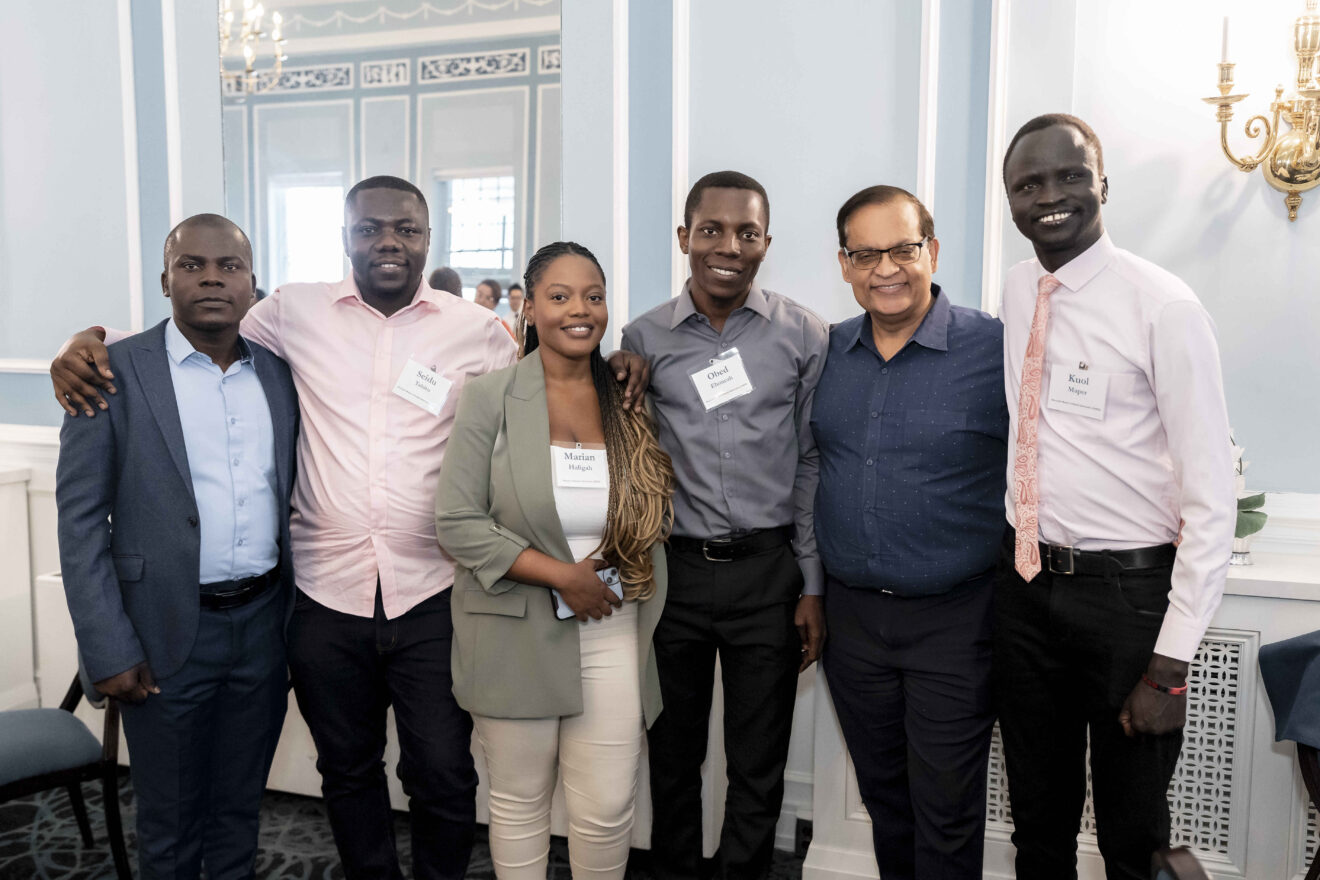
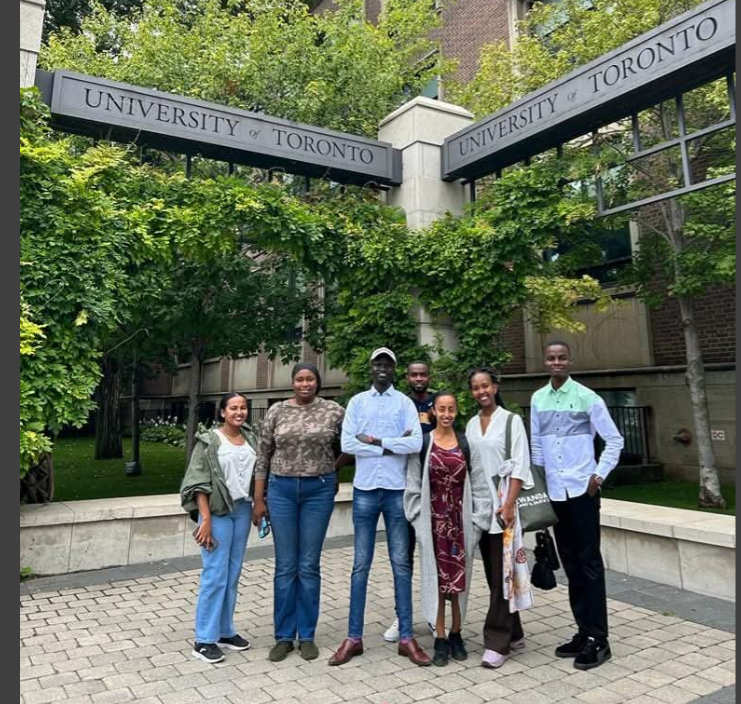
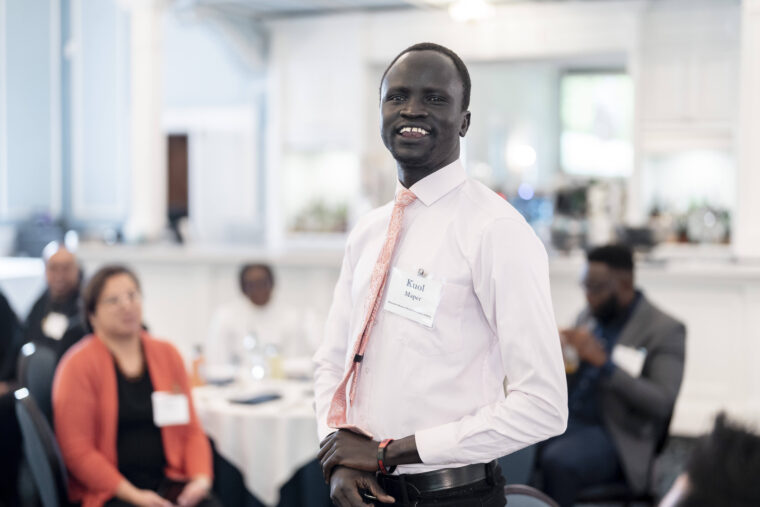
Kuol with colleagues and faculty at the University of Toronto
At Toronto, I turned my personal mission into academic research, focusing on hypertension care in fragile contexts. I proposed a telementoring platform to support health workers in South Sudan, offering a scalable way to strengthen cardiovascular care. I am deeply grateful to those who supported this work, especially Karim Keshavjee, Program Director of the Master of Health Informatics, whose guidance was invaluable. In many ways, it felt like coming full circle: transforming lived experience into solutions that could change lives.
Serving at the World Health Organization
That same spirit guides me today in my role as Data Manager at the World Health Organization. Here, I support health information systems in one of the world’s most complex humanitarian settings. The challenges are immense—poor internet connectivity, fragmented reporting, and data coming in from the hardest-to-reach places. But every challenge is an opportunity to prove what data can do when put to work.
I have seen timely information trigger rapid emergency responses, improve program coverage, and strengthen collaboration among humanitarian actors. One of my proudest moments was contributing to a cholera intervention that prevented a localized crisis through swift resource mobilization. These moments remind me that behind every dataset is a life that can be saved.
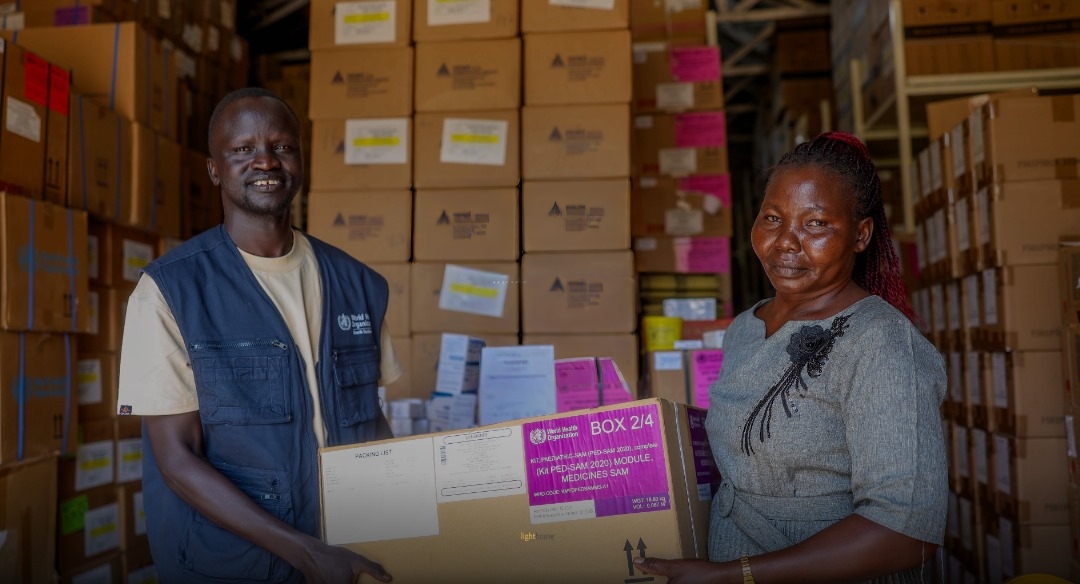
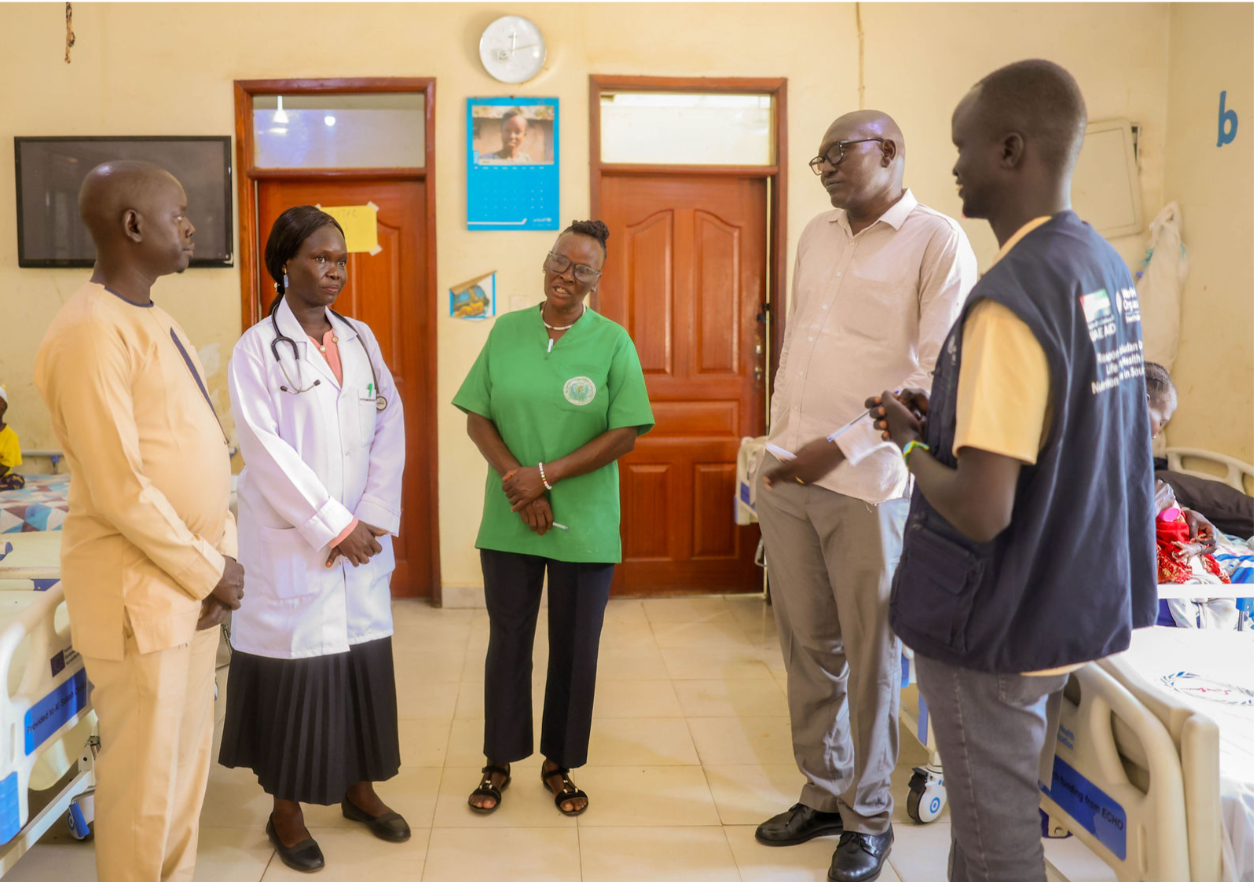
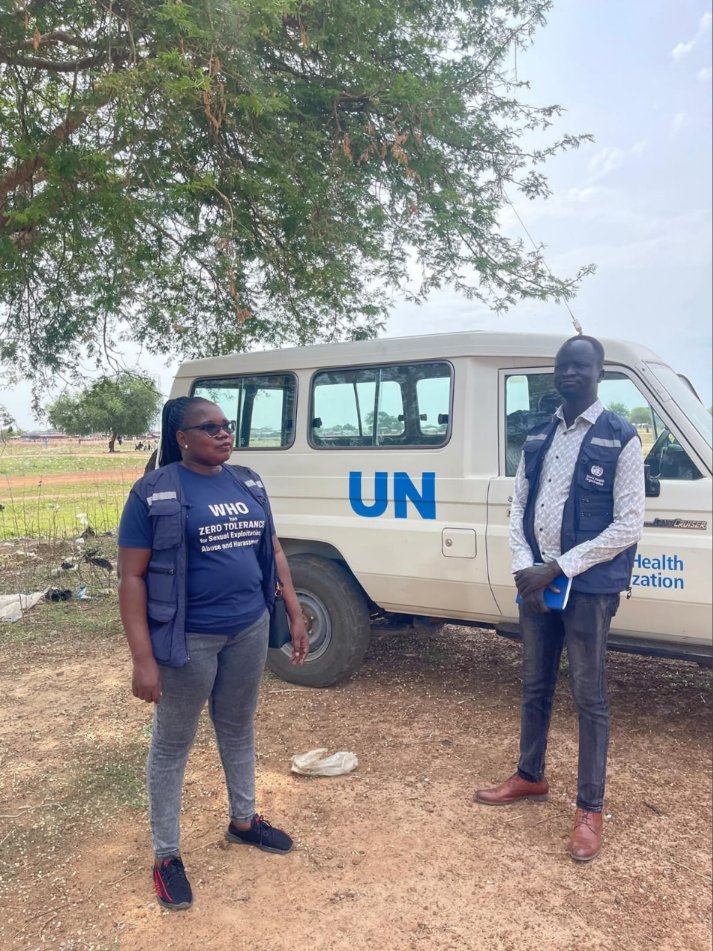
Kuol, serving as a Data Manager with the World Health Organization, supporting field operations.
Looking Ahead
From Kakuma to the WHO, my journey has been shaped by setbacks, resilience, and the relentless pursuit of purpose. Each chapter prepared me for the next: the discipline of Kakuma, the leadership of IRC, the skills from Moi University, the clarity brought by personal loss, and the access at the University of Toronto.
But at the heart of it all is my experience as a displaced person. Growing up in refugee and IDP camps gave me firsthand understanding of what it means when health systems fail—and what it takes to keep hope alive in fragile contexts. That lived experience continues to inspire my work today and fuels my determination to build systems that leave no one behind.
Looking forward, I want to deepen my contributions to digital health and health system strengthening in fragile contexts. My vision is to integrate community-based data, real-time analytics, and predictive systems to make healthcare more equitable and effective.
The Mastercard Foundation did not just fund my education; it expanded my capacity to serve and inspired a commitment to empower others through data-driven change. My journey from displacement into purpose is proof that where you begin does not define where you can go—and I hope it encourages other young people with similar beginnings to see their experiences not as limitations, but as fuel to transform communities.
Learn more about the Master of Health Informatics program at the University of Toronto under the Africa Health Collaborative.
More News & Events
Skip scroller content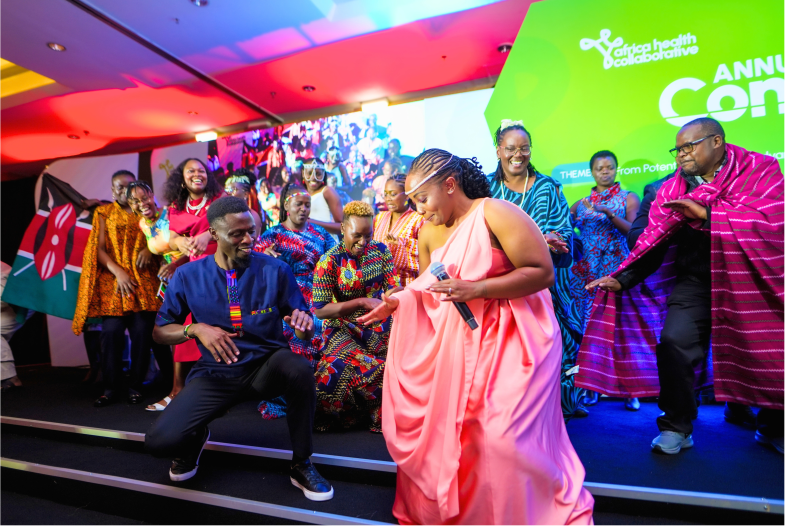
Beyond the Agenda: Bringing Mental Health and Well-being into the 2026 AHC Annual Convening
At the 2026 Africa Health Collaborative Annual Convening, mental health and well-being move beyond discussion into practice. Through quiet spaces, art therapy, movement, and youth-led innovation, AHC is creating a convening experience that supports meaningful participation, connection, leadership, and lasting impact.
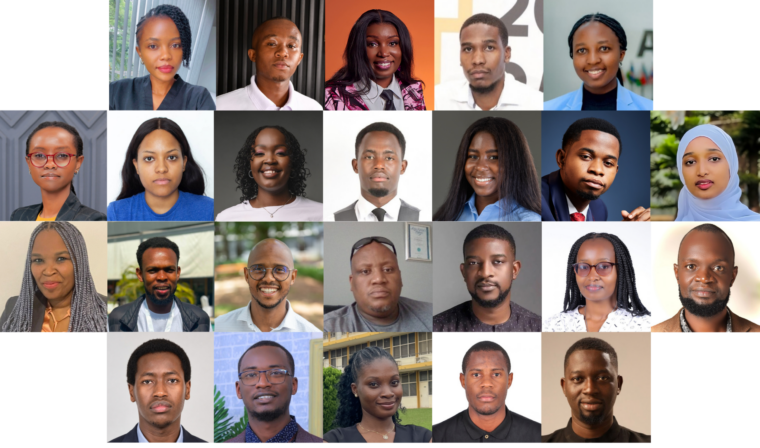
Meet the Ventures Showcasing at the 2026 Africa Health Collaborative Annual Convening
These ventures advancing primary healthcare, entrepreneurship and health systems strengthening across Africa will showcase their innovations at the 2026 Annual AHC Convening.
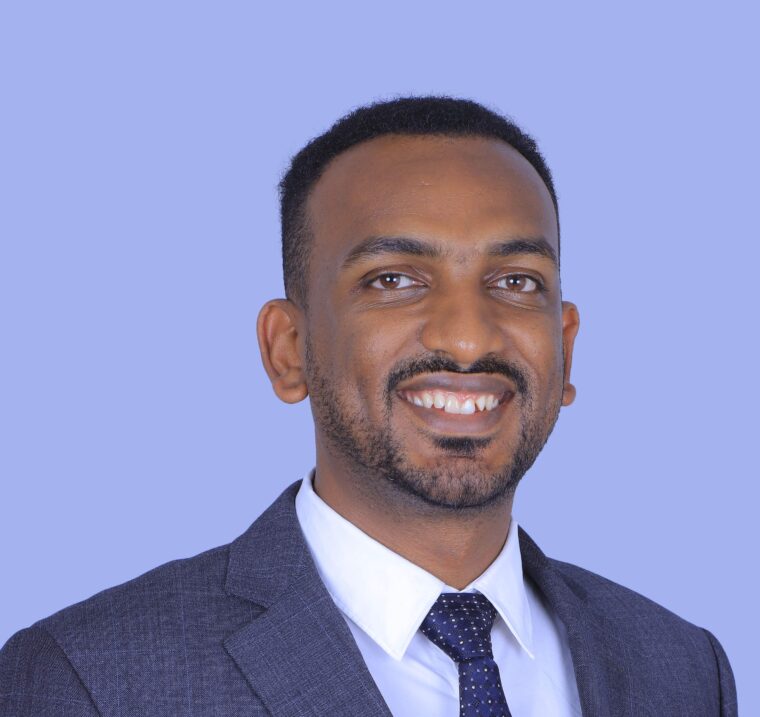
From Clinic to Country: Building Ethiopia’s First Integrated Model for Older Adult Health
What began with one doctor questioning fragmented care for older adults has grown into a pioneering model for Ethiopia. With leadership skills strengthened through the IMIx Certificate, Dr. Asrat built an integrated clinic now informing the country’s healthy aging efforts.
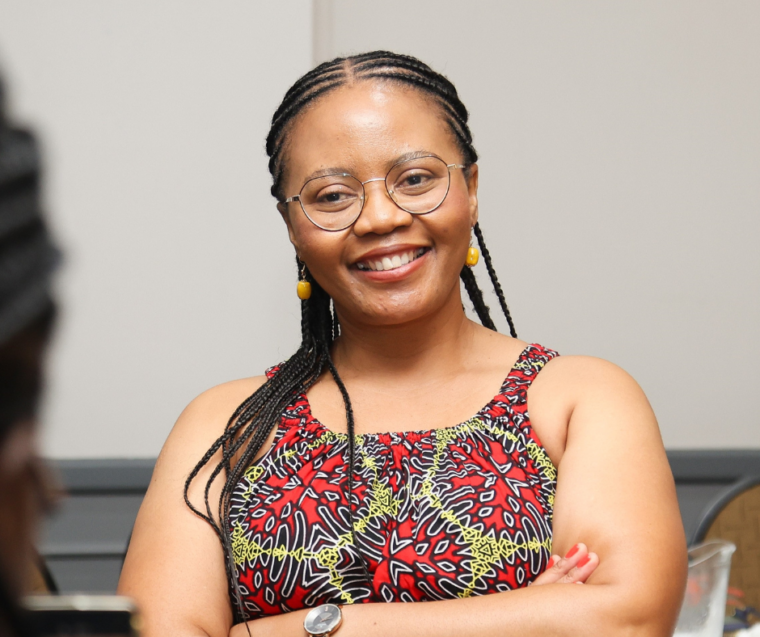
Apply for the Fully-Funded Healthy Futures South Africa (HFSA) PhD Fellowship Programme
This four-year programme supports emerging African health researchers and leaders to conduct community-focused research, strengthen health systems, and translate evidence into meaningful policy impact.
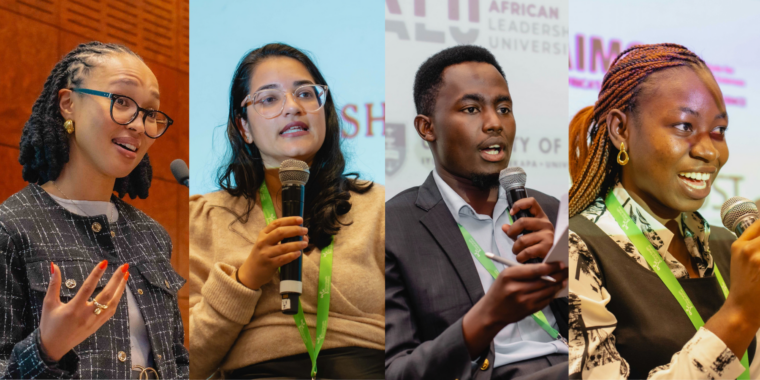
Ubuntu Rising Centres Youth Leadership, Innovation and Employment in Africa’s Health Future
More than 80 young health professionals, innovators and leaders gathered at Ubuntu Rising to advance youth leadership, innovation and employment. Their nine recommendations will inform the Africa Health Collaborative’s Youth Agenda and strengthen pathways for young people across Africa’s health ecosystem.
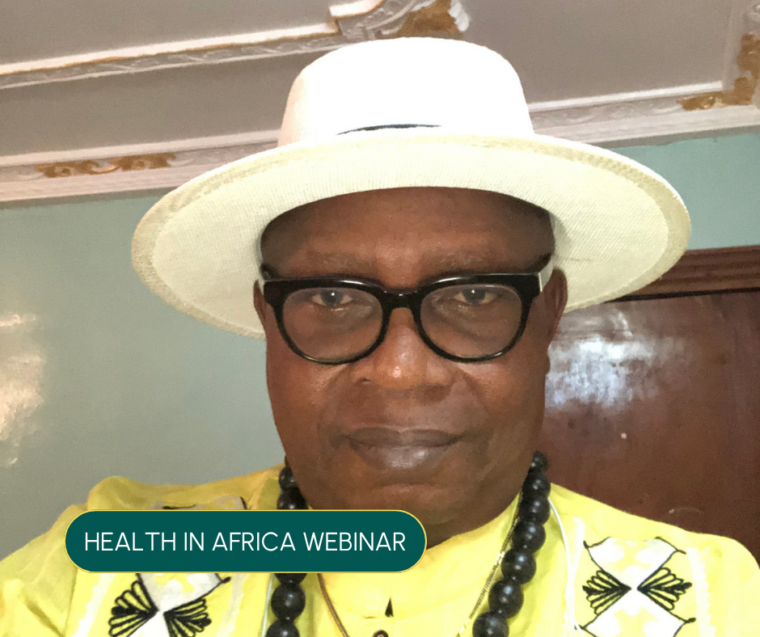
Advancing Health Equity in Africa: How Universities, Civil Society, and Communities Can Strengthen Primary Health Care
In the next HiAS, we explore how governments, universities, civil society and communities can work together to strengthen PHC and advance UHC in Africa, drawing on practical experiences, community engagement and lessons for building more equitable, resilient and people-centred health systems.
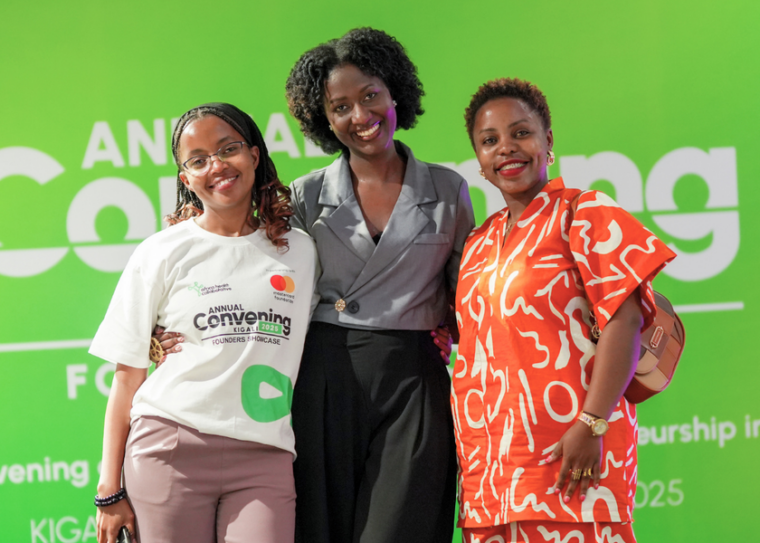
Emerging Leaders’ Day: From Youth Participation to Youth Influence
Emerging Leaders’ Day will bring together young health leaders from across Africa to build leadership skills, strengthen networks, and influence conversations shaping the future of health systems.
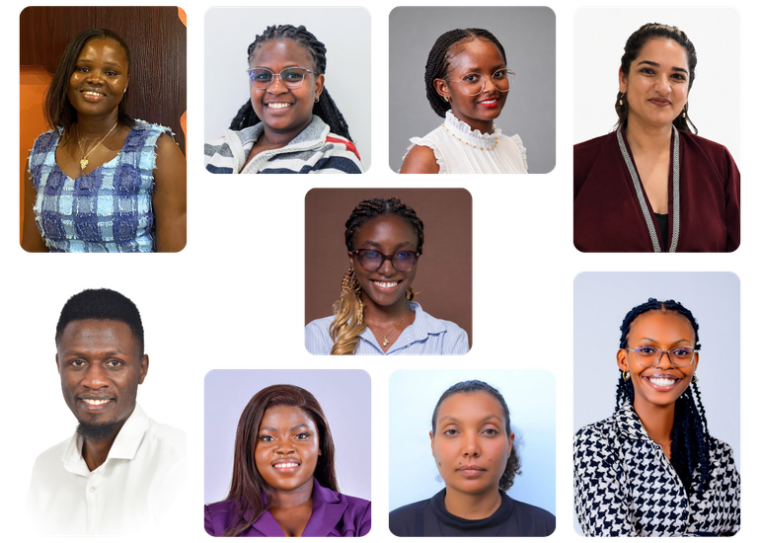
Leading Change Through Lived Experience
Across Africa, an emerging generation of health leaders is transforming personal challenges into powerful innovations. Through the AHC’s Young Leaders Committee, young researchers, entrepreneurs, technologists, and advocates are drawing on lived experiences with illness, caregiving, mental health, and healthcare inequities to design solutions that strengthen health systems and expand access to care.
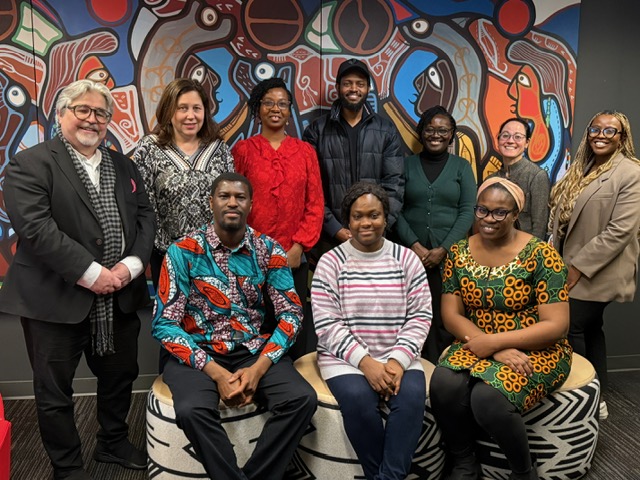
2027-2028 Doctor of Public Health Scholarships Open
We are pleased to announce the start of the 2027-2028 Mastercard Foundation graduate scholarship recruitment at the University of Toronto. This doctoral scholarship opportunity is open to recent alumni and graduating students at our Africa Health Collaborative partner universities. These graduate scholarships will be awarded to individuals who have demonstrated academic excellence in associated health-related disciplines […]
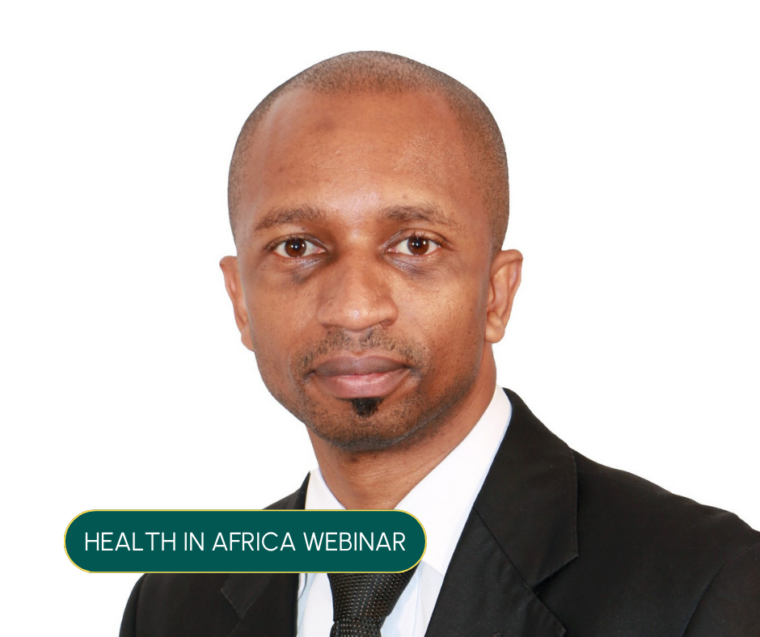
Health Innovation as a Pathway to Africa’s Health Sovereignty
Join the next HiAS as Dr. Robert Karanja explores how talent, research, investment, policy, and partnerships can unlock Africa’s potential in digital health, biotechnology, and deep-tech innovation.