

Every day, across rural communities in Nigeria, thousands of women begin labour with hope.
Many will never set foot in a hospital. According to the 2024 National Demographic and Health Survey, only about 46% of births in Nigeria were attended by skilled health personnel.
Instead, they turn to people they know and trust most—Traditional Birth Attendants (TBAs), also known as Iya Abiye in Yoruba communities. These caregivers have supported births in their communities for generations. They are geographically accessible, affordable, speak the local language, understand their customs and provide comfort that many women trust.
But when childbirth takes an unexpected turn, trust alone is not enough.
Without the training, equipment or referral systems needed to manage complications, even the most experienced birth attendants can find themselves powerless. Evidence from hospitals across Nigeria shows that delays in reaching emergency care continue to cost the lives of mothers and babies.
For Funmi Odushola, this reality posed a fundamental question.
What if the answer isn’t replacing Traditional Birth Attendants, but working with them?
That simple idea has become the foundation of an innovative approach that is helping bridge the gap between trusted community care and the formal health system. Rather than viewing TBAs as competitors to the formal health system, Funmi saw an opportunity to transform trust into a bridge for safer maternal care.
Finding the Missing Link
Funmi did not come from a clinical background. Her experience was in business, research, and helping organizations solve complex problems through the LofeLofe Foundation.

In 2020, a community needs assessment revealed a recurring challenge: preventable maternal and newborn deaths. As her team looked deeper, they found that many women relied on Traditional Birth Attendants because they were nearby, affordable and deeply trusted.
“Women were making the best decisions they could with the options available to them,” she explains. “The challenge wasn’t simply clinical care. It was access, trust, affordability and relationships.”
Her conversations with healthcare providers revealed another critical gap. Women often reached hospitals only after complications had developed, with no medical records or referral pathway. Funmi realized the issue was not the TBAs themselves, but the lack of connection between them and the formal health system.
Learning to Think Differently
By 2024, after months of engaging government agencies, health regulators, TBA associations and community leaders, Funmi was preparing to launch a pilot project.
Around the same time, she joined the IMIX Effective Healthcare Management Program, delivered by the University of Toronto under the Africa Health Collaborative in partnership with the Mastercard Foundation.
The programme gave her practical tools to strengthen what had begun as a community initiative. It also strengthened her ability to view maternal health challenges through a systems lens rather than as isolated clinical problems.
“The training helped us move from a well-intentioned intervention to something that could create systems-level impact,” she says.
Modules on leadership, systems thinking, governance, strategy, data analytics, communication and action planning helped her break a complex challenge into manageable parts and design solutions that could be sustained beyond a single project.
Perhaps most importantly, the programme encouraged her to challenge assumptions. Instead of asking how to eliminate Traditional Birth Attendants, she began asking how they could become part of the solution.
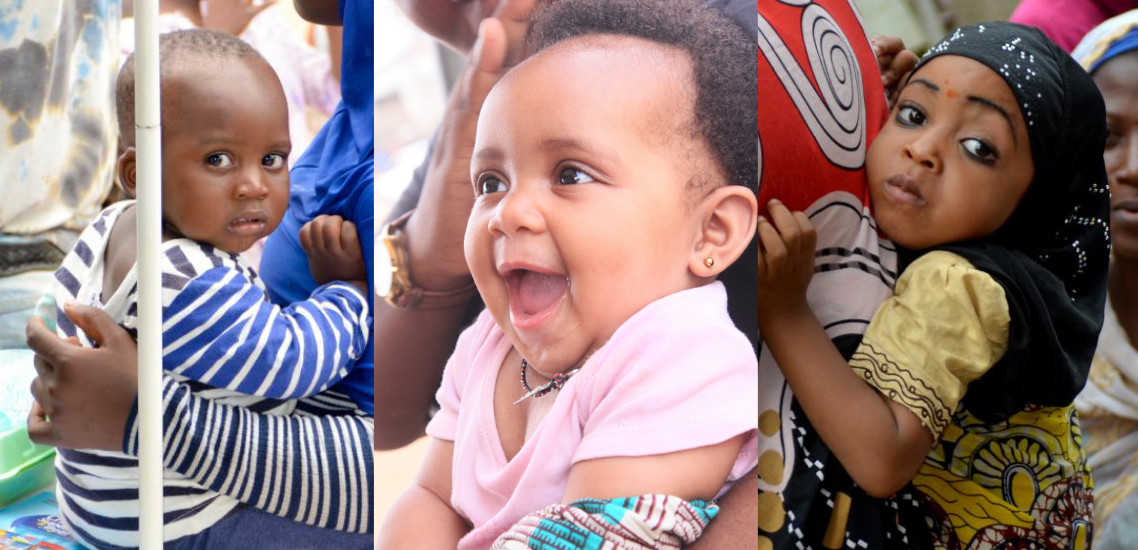
Building Trust, Not Replacing It
Funmi’s pilot focused on three Traditional Birth Attendant centres in Agege, Lagos.
The goal was clear: improve the quality of care while preserving the trust communities already had in their local birth attendants. The centres were renovated and equipped with cleaner facilities and sterile delivery supplies.
TBAs received practical training on maternal and newborn care, including how to monitor blood pressure, identify danger signs such as pre-eclampsia, practice infection prevention, and recognize when a woman needed urgent referral to a hospital.
Simple documentation tools helped them record patient information, while ongoing mentorship and peer reviews reinforced new practices.
Most importantly, referral pathways were created so that women experiencing complications could be transferred quickly to formal healthcare facilities.
The changes have already begun to show results.
TBAs are referring high-risk pregnancies earlier instead of attempting to manage complications beyond their expertise. Hygiene standards have improved, and relationships between Traditional Birth Attendants and healthcare providers are steadily growing stronger.
Partnerships that Save Lives
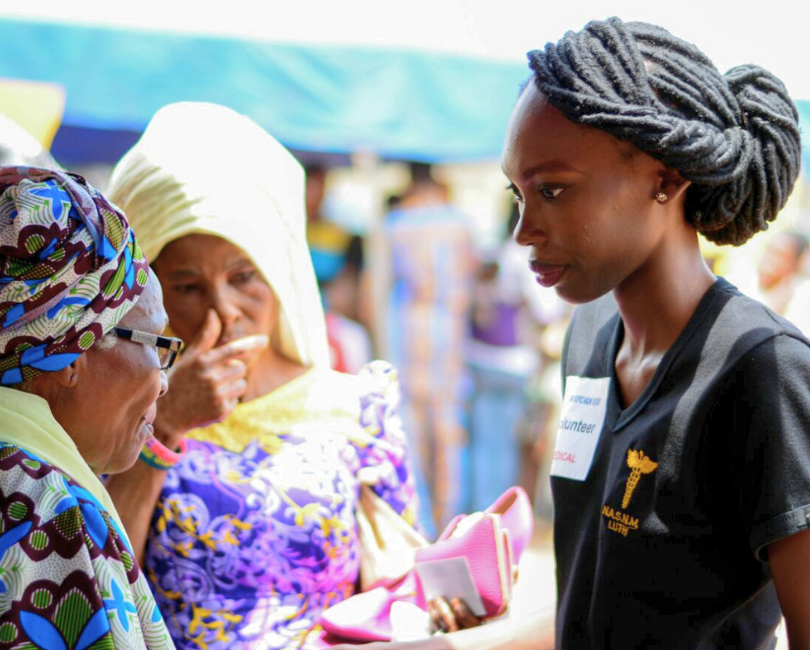
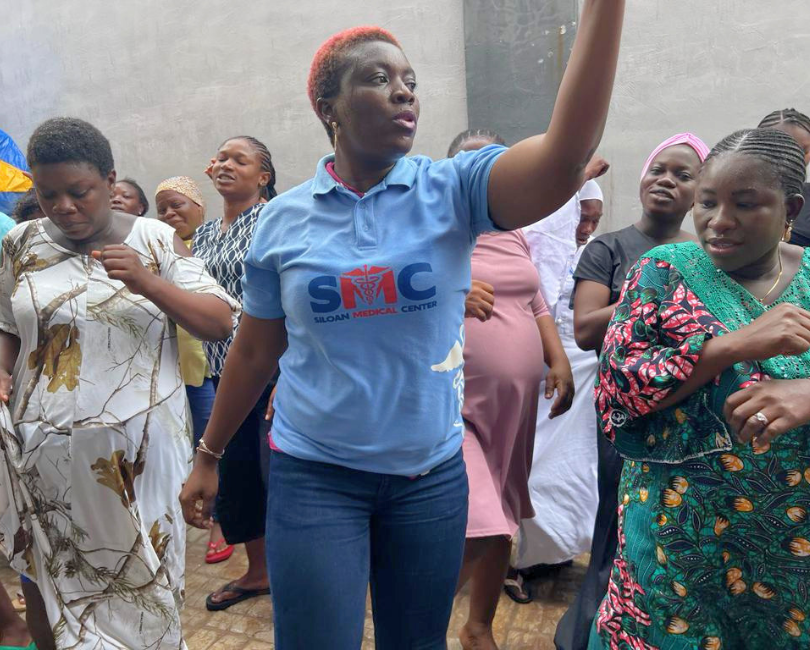
A key part of the model has been collaboration. Working with partners including Siloan Medical Center (SMC) and Accessible Care for Everyone (ACE), Funmi has helped bring formal healthcare closer to the communities that need it most.
The partnerships provide referral pathways, regular training for Traditional Birth Attendants and greater access to quality maternal care.
They have also helped build trust between healthcare professionals who once viewed each other with suspicion.
“Trust between TBAs and formal healthcare providers has grown, which is foundational to the success of anything else. When people work together instead of against each other, women benefit,” Funmi says.

A Different Vision for Maternal Healthcare
Funmi believes Nigeria’s maternal health challenges cannot be solved by focusing only on hospitals. A truly inclusive health system must meet people where they are—recognizing trusted community providers, strengthening their skills, and connecting them to formal healthcare through effective referral systems and supportive policies.
For Funmi, this is not about choosing between traditional and modern healthcare. It is about bringing them together to save more lives.
Investing In People Who Create Change
Funmi’s journey reflects the Africa Health Collaborative’s belief that lasting health change begins by investing in people.
Through programmes like the IMIX Effective Healthcare Management Programme, professionals from diverse backgrounds gain the leadership, systems thinking and management skills needed to solve complex health challenges in their own communities.
By combining evidence, partnerships and community trust, Funmi is helping create a future where TBAs become connected partners within the health system rather than isolated caregivers.
Her journey demonstrates that strengthening health systems is not always about replacing existing community structures. Sometimes it is about equipping them, connecting them, and enabling them to become part of a safer continuum of care for mothers and newborns.
More News & Events
Skip scroller content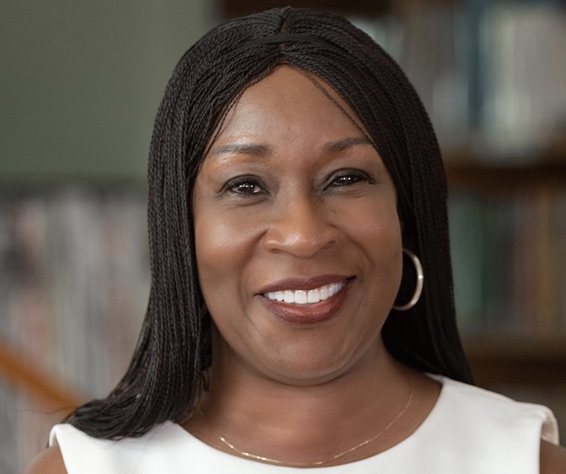
Remarks by Prof. Angela Owusu-Ansah at the Closing Ceremony of the 2026 Africa Health Collaborative Annual Convening
At the closing ceremony of the 2026 Africa Health Collaborative Annual Convening in Nairobi, Kenya, incoming Executive Steering Committee Chair Prof. Angela Owusu-Ansah shared her vision for empowering young Africans to document and amplify the continent’s health successes.

Meet the Speakers Scheduled for the 2026 AHC Annual Convening
Meet the distinguished speakers of the 2026 Africa Health Collaborative Annual Convening as they share insights on health workforce development, leadership, innovation and partnerships shaping the future of health systems across Africa and empowering the next generation of health leaders.

Beyond the Agenda: Bringing Mental Health and Well-being into the 2026 AHC Annual Convening
At the 2026 Africa Health Collaborative Annual Convening, mental health and well-being move beyond discussion into practice. Through quiet spaces, art therapy, movement, and youth-led innovation, AHC is creating a convening experience that supports meaningful participation, connection, leadership, and lasting impact.
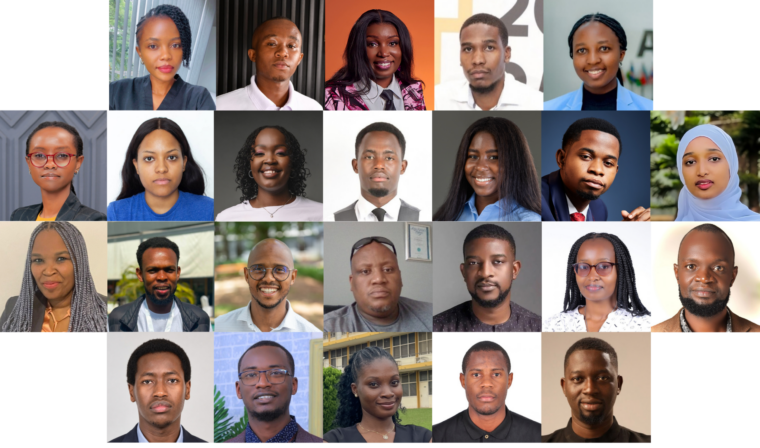
Meet the Ventures Showcasing at the 2026 Africa Health Collaborative Annual Convening
These ventures advancing primary healthcare, entrepreneurship and health systems strengthening across Africa will showcase their innovations at the 2026 Annual AHC Convening.
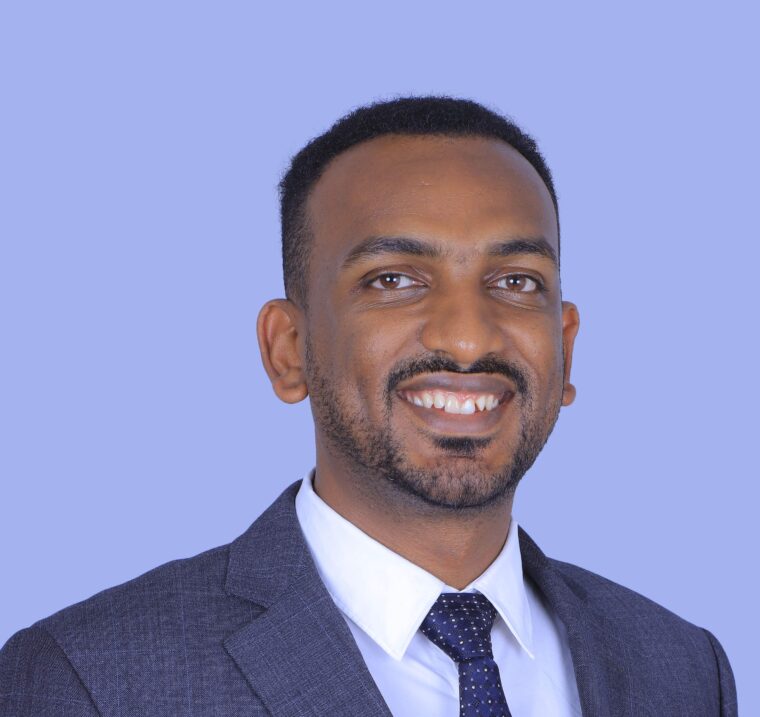
From Clinic to Country: Building Ethiopia’s First Integrated Model for Older Adult Health
What began with one doctor questioning fragmented care for older adults has grown into a pioneering model for Ethiopia. With leadership skills strengthened through the IMIx Certificate, Dr. Asrat built an integrated clinic now informing the country’s healthy aging efforts.

Apply for the Fully-Funded Healthy Futures South Africa (HFSA) PhD Fellowship Programme
This four-year programme supports emerging African health researchers and leaders to conduct community-focused research, strengthen health systems, and translate evidence into meaningful policy impact.

Ubuntu Rising Centres Youth Leadership, Innovation and Employment in Africa’s Health Future
More than 80 young health professionals, innovators and leaders gathered at Ubuntu Rising to advance youth leadership, innovation and employment. Their nine recommendations will inform the Africa Health Collaborative’s Youth Agenda and strengthen pathways for young people across Africa’s health ecosystem.
Advancing Health Equity in Africa: How Universities, Civil Society, and Communities Can Strengthen Primary Health Care
In the next HiAS, we explore how governments, universities, civil society and communities can work together to strengthen PHC and advance UHC in Africa, drawing on practical experiences, community engagement and lessons for building more equitable, resilient and people-centred health systems.
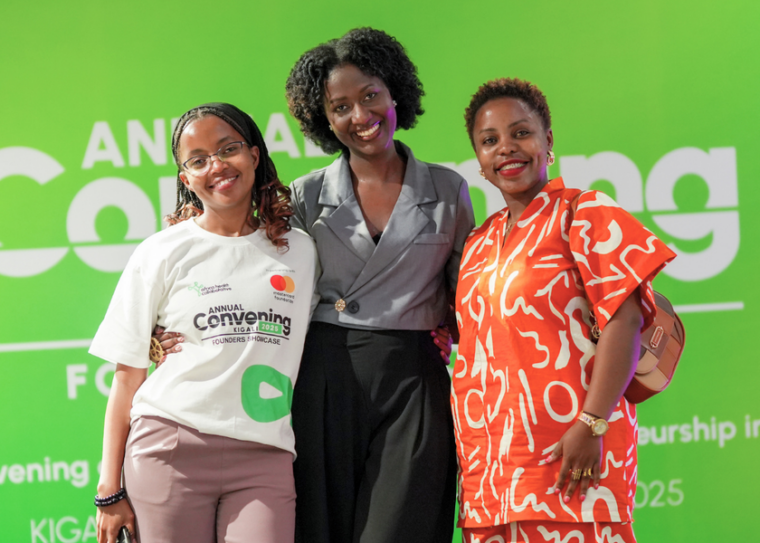
Emerging Leaders’ Day: From Youth Participation to Youth Influence
Emerging Leaders’ Day will bring together young health leaders from across Africa to build leadership skills, strengthen networks, and influence conversations shaping the future of health systems.
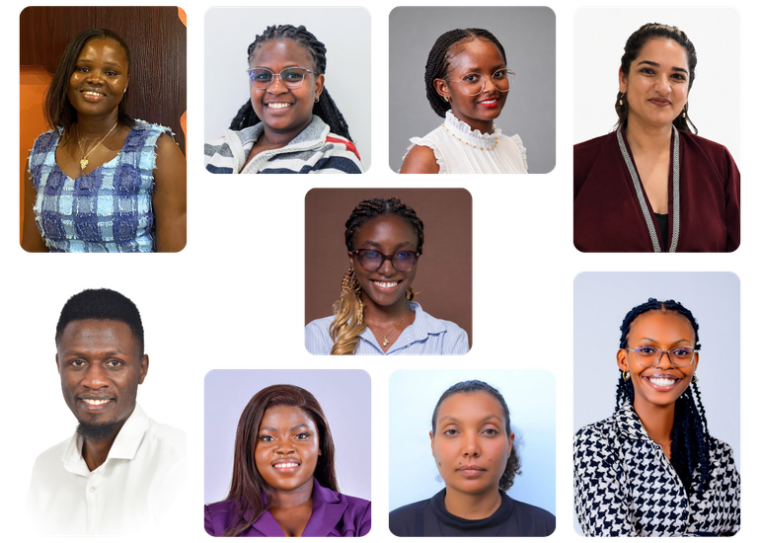
Leading Change Through Lived Experience
Across Africa, an emerging generation of health leaders is transforming personal challenges into powerful innovations. Through the AHC’s Young Leaders Committee, young researchers, entrepreneurs, technologists, and advocates are drawing on lived experiences with illness, caregiving, mental health, and healthcare inequities to design solutions that strengthen health systems and expand access to care.