

Africa Health Collaborative Research Fund 2026
Deadline: August 15, 2026 (12PM GMT)
Welcome to the Africa Health Collaborative (AHC) research application page.

Overview of the call
Member institutions of the Africa Health Collaborative (AHC) are contributing matching funds to support collaborative bilateral and multilateral research initiatives through a joint call for proposals. Bilateral projects are eligible to receive up to $22,000 USD – with each institution awarding up to $11,000USD to investigators at their home institution. (Multilateral proposals will be scaled up to $11,000USD per institution).
Interested applicants must first submit an Expression of Interest by August 15, 2026 – See form below for application information.
The key aim of the AHC Research Fund 2026 (the Fund) is to encourage and provide initial support for the development/expansion of high-quality research activities for Early Career Researchers (ECR) enabling principal investigators to subsequently apply for funding to support the next phase of their joint research that will result in greater impact.
The theme for this year’s grant is focused on Health Human Resources Policy or Health Financing Policy in Primary Health Care in Sub-Saharan Africa.
Only ECRs from the following Health Collaborative institutions may apply: “Addis Ababa University, African Institute for Mathematical Sciences, African Leadership University, Amref International University, Ashesi University, Kwame Nkrumah University of Science and Technology, Moi University, University of Cape Town, University of Toronto”
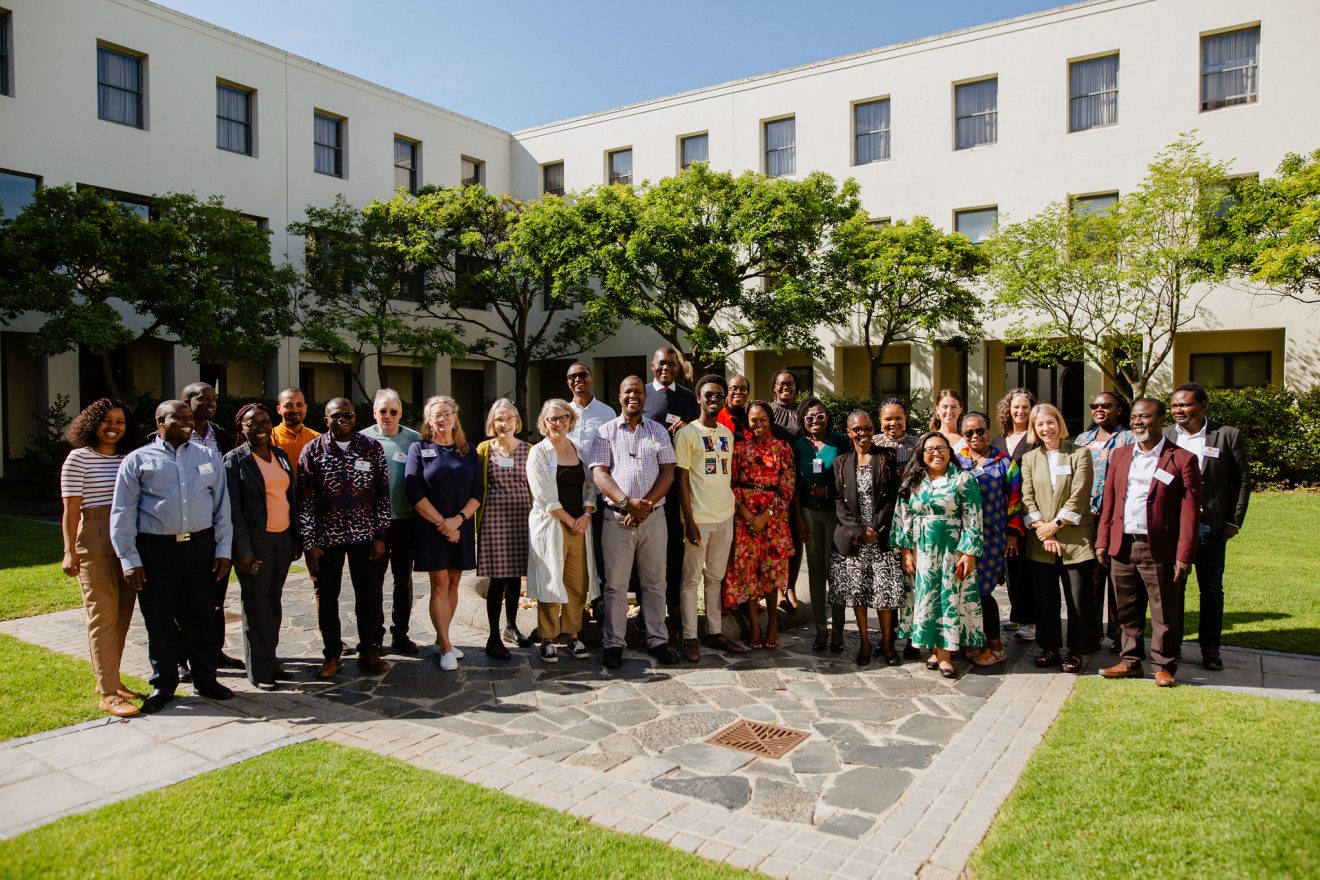
About the Africa Health Collaborative
The Africa Health Collaborative (AHC) is a multi-year partnership working to strengthen primary health care systems across Africa through health workforce development, education, innovation, and entrepreneurship.
The AHC has identified research as an integral dimension for the network, focusing on developing translational research that has the potential to have a positive impact on communities, building research capacity, establishing new and/or growing existing research collaborations, and generating new insights and understandings to guide the development of Africa’s health ecosystems.
Eligibility
All proposals must be led by an Early Career Researcher from an AHC member institution (See Appendix 1 for definition of ECR by institution) and be bilateral (2 ECRs between two AHC member partners) or multilateral (three ECRs between three or more AHC member partners). Proposals must also include participation of masters, doctoral or post-doctoral trainees. Eligible applicants may only lead one application (Further application requirements for applicants at each institution can be found in Appendix 2).
One may apply without a co-applicant. If approved by their home institution, the proposal will be shared publicly in a repository to identify a potential co-applicant(s) to apply for the Fund. External collaborators (including researchers from other universities internationally, or those working in non-academic contexts such as community organizations, government, NGOs) cannot lead an application but can be involved in the proposed activities, where the benefit of their involvement to the collaboration is justified in the proposal.
Activities and Scope
Proposals may include targeted research support such as joint workshops, researcher exchanges, and the formation or research exchange groups between AHC member institutions. Joint projects will commence from January 1, 2027 for a maximum of 18 months.
Value, Duration and Funding Scope
Bilateral projects are eligible to receive up to $22,000 USD – with each institution awarding up to $11,000USD to investigators at their home institution. (Multilateral proposals will be scaled up to $11,000USD per institution). Joint funding will be provided to support up to 9 proposals for a funding period of 18 months.
The funding provided is intended to support expenses including but not limited to costs of travel (ECRs, Post-Doctoral Fellows, research associates, graduate student researchers) between the institutions, and costs associated with research, workshops and meetings (Details of eligible and ineligible costs by institution are detailed in Appendix 3).
Equality/Equity, Diversity and Inclusion
Adherence to respective equality/equity, diversity and inclusion (EDI) policies are an important feature of this program to ensure that all participants can do their best work, thrive and succeed. Applicant teams should consider how they can take meaningful steps in their future collaborations to foster an environment that values, supports and respects a diverse range of views, knowledge and experiences. Applicants should consider EDI as it applies to gender, indigenous peoples, disabilities, and sectors.
Evaluation Criteria
A joint review committee with representatives from all member institutions will assess each proposal according to its academic merit using the following criteria:
- Project design and rationale
- Collaborator complementarity
- Potential translational impact and demonstrability of impact
- Capacity for future collaboration/funding
- Relevance and value of research project to Africa Health Collaborative activities
How to Apply
Applying to this funding will take place in two stages:
1. Submission of Expressions of Interest
The aim of this stage is for interested applicants to express interest and demonstrate eligibility for the Fund.
Your application will be reviewed by your home institution, and if eligible, you and your co-applicants invited to submit a full application. One template should be completed on behalf of the full project team.
If approved but you do not have a co-applicant from an AHC member institution, your application will be shared publicly in a repository for you to identify a potential co-applicant to apply for the Fund.
- Deadline: August 15, 2026 (12pm GMT)
- EoI Results Announced: September 7, 2026 (12PM GMT)
2. Invitation to submit full proposals (if approved)
All eligible applicants who submitted an EoI and are approved will be contacted and invited to submit a full proposal by November 7, 2026 (12PM GMT). One joint application per project will be requested.
Need Help?
Please email your queries to africasecretariat@utoronto.ca
Appendix 1: Definition of Early Career Researcher (ECR) by Institution
Addis Ababa University: Full time academic faculty with rank of assistant professor and below (not more than two years since appointment to the last rank). Faculty from local partner institutions are also welcome to apply (Debra Berhan University, Wolkite University, Wollo University, Woldia University).
African Institute for Mathematical Sciences: All researchers holding a doctorate degree and having at least two years left on their contract with AIMS.
African Leadership University: Five years of their first significant research-related appointment, pre/post post-master’s degree or equivalent milestone.
Amref International University: Either graduated with a PhD in the last three years or a PhD student with evidence of full registration for the course; a master’s degree holder with evidence of at least one publication in peer reviewed journals as a first author or second author.
Ashesi University: Early career would include all full-time faculty researchers graduated with a PhD in the last five years; pre/post master’s degree holders with evidence of at least one publication in a peer reviewed journal.
Kwame Nkrumah University of Science and Technology: All PhDs, Postdoctoral fellows, up to the level of Lecturer.
Moi University: Those with PhD attained within last 10 years and/or without funded research.
University of Cape Town: Up to the rank of senior researcher/senior lecturer OR within 5 years of PhD graduation.
University of Toronto: 5 years from time of first research appointment.
Appendix 2: Project Requirements by Institution
Addis Ababa University: Proposal must address primary health care and health systems related issues in a multi-disciplinary and innovative approach, must include graduate trainees to participate in the proposed project.
African Institute for Mathematical Sciences: Proposals must have substantive mathematical components and must include one or more graduate student researchers.
African Leadership University: Individuals must demonstrate a strong focus on solving societal challenges through entrepreneurial innovative health research. Teams should include final year graduate or postgraduate researchers. Proposals must address challenges in one of the following 1) Public health, community health and related areas in Africa 2) Ethnographic approaches to understanding African Health systems 3) Indigenous practices in maternal health 4) Solutions grounded in entrepreneurial leadership and interdisciplinary innovation. All Proposals much include 1) Innovative approaches 2) Practical application and impact 3) Interdisciplinary methods such as predictive analytics/health systems modeling/financial sustainability analysis/behavioral insights and human-centered design/digital health innovations/community based-research/implementation science. Proposal must be scalable and sustainable.
Amref International University: Individuals must be self-driven, with proposed work that is innovative and has the potential to impact practice and policy in strengthening health systems for more robust primary healthcare systems.
Ashesi University: Proposals must address an interdisciplinary or transdisciplinary issue involving primary healthcare policy and one or more of the following: social sciences, engineering, computer science, law, or business administration, namely HR or financing. Must include a graduate or undergraduate student.
Kwame Nkrumah University of Science and Technology: Must include graduate students, assistant lecturers, and lecturers in the first two years.
Moi University: Affiliation to Public Health or related health sciences.
University of Cape Town: None
University of Toronto: None
Appendix 3: Eligible/Non-eligible costs (Additional institution-specific requirements below)
| Eligible Costs | Ineligible costs |
| – Travel costs including flights, hotels and subsistence – Costs associated with organizing workshops/meetings (excluding RA/administrative staff) – Research costs, including consumables (up to a maximum of $1,500 USD) – Graduate Stipends/Scholarships | – Replacement research/teaching costs – Directly incurred staff e.g. Research Assistant – Directly allocated costs including applicants’ time – Indirect costs/estates costs – Equipment – Conference attendance |
Addis Ababa University:
Eligible: Travel costs including flights, hotels and subsistence, Costs associated with organizing workshops/meetings (excluding RA/administrative staff), Research costs, including consumables (up to a maximum of $1,500 USD), Modest support to graduate students, Conference attendance to present the output of the research, Publication related costs for the output of the research.
Not eligible: Replacement research/teaching costs. Directly incurred staff e.g. Research Assistant, Directly allocated costs including applicants’ time, Equipment.
African Leadership University:
Eligible: Graduate research stipends in accordance with intern remuneration policy, External consultation fees related to data collection/analysis, Field visits for data collection, 1 conference, software licenses for data modeling, health analytics tools, prototyping materials not found in Fablab, Capacity-building sessions for students, stakeholder workshops to disseminate findings, institutional overhead (up to 10%), publishing fees for open-access journals and marketing materials.
Not Eligible: Salaries for ALU staff/faculty already on payroll, international travel unrelated to research/excessive cash advance, high-cost laboratory equipment or devices, large-scale events not related to project, overhead exceeding allocated amount, entertainment, non-research-related marketing or excessive branding costs.
Amref International University: Funding is for costs related to development and approval of study instruments, data collection, personal costs related to the research such us travel, accommodation, out of pocket and meals as per the organizational policy; dissemination of study findings including publishing and presentation in conferences.
Ashesi: Funding is for costs related to development and approval of study instruments, data collection, personal costs related to the research such us travel, accommodation, and meals as per the organizational policy; dissemination of study findings including publishing and presentation in conferences.
University of Toronto: Graduate stipends/scholarships not eligible
Appendix 4: The following institutional level approval is required before submitting your grant
Addis Ababa University: None
African Institute for Mathematical Sciences: None
African Leadership University: Proposal and Protocol Approval (Project Activation Lead and Healthcare Programs Director) AND Budget (Project Activation Lead and Provost)
Amref International University: Division of Research and Community Extension and Ethical review will be granted before commencing field work by Amref ESRC and NACOSTI
Ashesi University: None
Kwame Nkrumah University of Science and Technology: Head of Department and Director of Office of Grants and Research
Moi University: Consent by School of Postgraduate, Research and Innovation and OR ethical review board (ISERC)
University of Cape Town: None
University of Toronto: None